
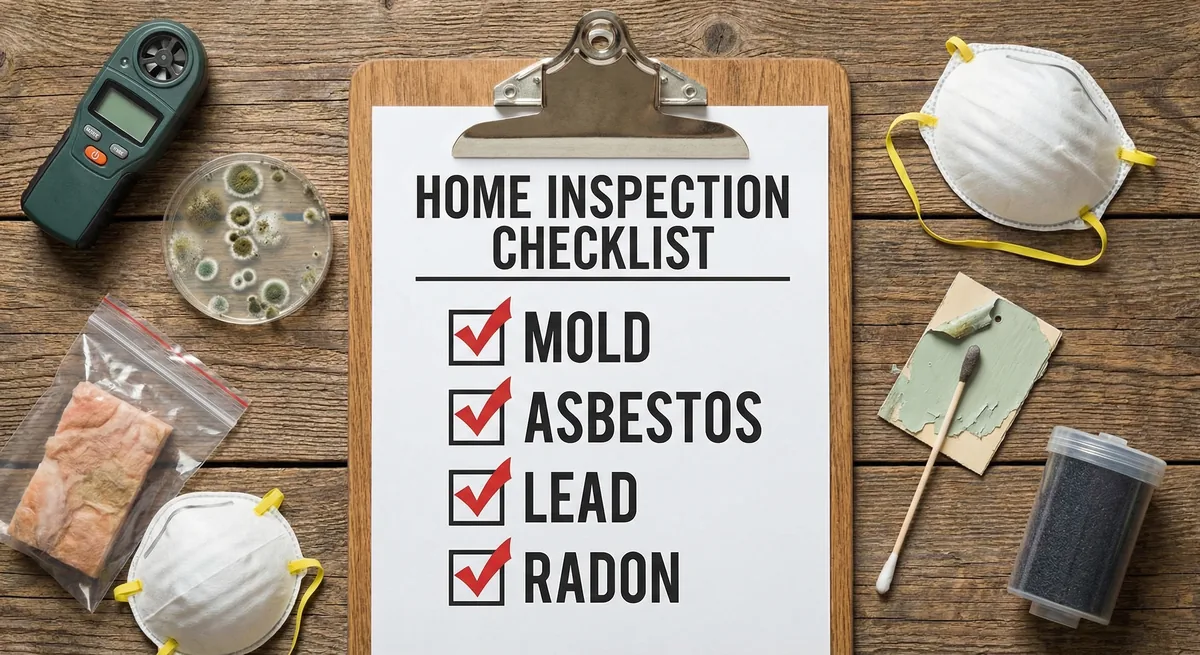
Start with the decision you need to make, the areas involved, and your deadline. Then agree which environmental tests can answer that question. Use the free two-page checklist below to gather property details, previous reports, access arrangements, and questions for your testing provider.
A checklist to take with you
Print it for a home purchase, renovation, rental, or commercial property discussion. No signup is required. The checklist includes all six A1 service categories and space for your project notes.
Start with the property and the decision date
Record the address, property type, approximate construction year if known, and the rooms or materials involved. For a purchase, provide the inspection or due-diligence deadline. For renovation, describe the work planned and when it will begin. For a business, identify occupied areas and any restrictions on access. Share written requirements from a lender, owner, contractor, or other recipient before booking.
Selling a home: decide which question testing should answer
Before listing, gather previous environmental reports, repair records and unresolved concerns. Testing is most useful when it answers a defined question about the property; ordering every available test does not create an all-purpose clearance certificate.
- Review what is already known. Check the tested locations, dates, methods and limitations, and note later repairs or changes in room use. Keep the full reports rather than only a summary result.
- Plan radon testing early. EPA recommends testing before putting a home on the market. A buyer may still request a new measurement, particularly after alterations or when a different lower level will be used.
- Do not substitute samples for fixing a known problem. For visible mold, EPA says sampling is usually unnecessary; discuss the moisture source and appropriate corrective work rather than waiting for a general test panel.
- Agree on the decision and recipient. Ask what a proposed assessment can establish and what documentation the buyer or other recipient needs. Allow time for the selected work and any follow-up.
Review our report guide when organizing the records. A test does not guarantee a sale, prevent further questions or replace the transaction requirements that apply to your property.
New construction: questions to settle before moving in
A newly built home can still have indoor-air concerns. EPA identifies indoor pollutant sources, moisture and ventilation as relevant in new as well as existing homes. Start with the building and its handover records, not an assumption that one broad air test can certify every condition.
Match the concern to the pollutant. New materials may raise VOC questions, including whether formaldehyde is relevant; dust-producing work may raise particle questions. Radon requires a separate measurement. Visible mold or moisture damage calls for attention to that condition, not an automatic broad air panel. These are different questions, not a standard package for every new home. Before ordering tests, ask which pollutant or condition each proposed measurement addresses and what its result would change.
- Ask what was installed and when. Keep the product information for finishes, flooring, adhesives and other new materials, including the manufacturer’s use and ventilation instructions.
- Review moisture and cleanup concerns. Ask about construction wetting, leaks, drying and any unresolved staining or odor. Describe the location and timing of a concern; its cause cannot be determined from the smell alone.
- Understand normal operation. Obtain the ventilation and equipment operating instructions and identify whom to contact about an incomplete or malfunctioning system.
- Confirm the specific testing question. Share any written requirements and planned occupancy date with the provider. Ask how the method, building conditions and reporting schedule fit that question.
Ask whether radon-resistant features were installed and whether a radon measurement has been completed; EPA recommends testing new homes even when those features are present. See the VOC guide for product-related questions. This checklist does not establish a universal airing-out period, a mandatory package or permission to occupy the home.
Asbestos: identify the materials that may be disturbed
Tell the provider about planned flooring, ceiling, wall, insulation, or other material work. Share earlier surveys if available, including their sampled locations and limitations. Leave suspect materials undisturbed while professional evaluation is arranged; do not collect samples yourself for this checklist. EPA explains why trained professionals should assess and sample suspected asbestos.
Read about asbestos testing and testing before renovation.
Mold: describe the moisture history first
Note leaks, flooding, staining, odors, affected rooms, and previous repairs. A photograph taken from a safe, accessible position can help explain the concern. Ask what a proposed sample would establish. EPA says sampling is usually unnecessary when visible mold growth is already present; there are no federal limits for airborne mold that a sample can certify compliance with.
A mold and moisture consultation can help determine whether sampling answers a useful question for the property.
Lead: be specific about the surface or sample
Identify older painted components and planned disturbance. Explain whether the question concerns paint, dust, or water. EPA distinguishes a lead-based paint inspection from a lead-hazard risk assessment; a targeted sample is narrower than either. Confirm the assignment and required qualifications before scheduling. A1’s lead-testing service is not offered for HUD or federal grant projects.
Radon: leave time for the measurement
Obtain any previous report, including dates, locations, and test conditions. Tell the provider how lower-level rooms will be used, whether a radon system is present, and who can provide access. Ask about the monitoring period, building instructions, and reporting date before relying on the result for a transaction deadline.
See radon testing and our home-purchase planning guide.
Air quality and commercial properties: describe when the issue occurs
For an intermittent odor or indoor-air concern, record the affected rooms, time of day, occupancy, recent products or building work, and ventilation conditions. These details help the provider choose useful observations and measurements. For commercial work, add tenant access, operating hours, relevant processes, and the intended report recipient. A general air-quality test does not automatically answer every workplace or regulatory question.
Explore indoor-air-quality testing or commercial and industrial testing for your project.
Agree the quote, access, and deliverable
Before booking, confirm the areas included, sample types and number, laboratory analysis where applicable, travel, reporting, and any follow-up consultation. Ask which qualifications are required for the assignment and which work is outside the scope. Confirm the complete schedule for your selected work, including any monitoring period, analysis and reporting, rather than assuming a fixed turnaround.
Bring previous reports and arrange access with the owner or property manager. Follow the provider’s instructions; do not disturb suspected materials to prepare for the visit. Afterward, review findings alongside the locations assessed and any limitations. Our testing-report guide explains what to look for.
After remodeling: plan any follow-up around the work
Before choosing post-work testing, gather the project records and identify the question that remains. EPA emphasizes controlling dust, cleaning the work area, addressing moisture problems, and following product instructions for ventilation.
- Record what changed. List the rooms, materials and products involved, installation dates, and any earlier findings. Keep product labels and the manufacturer’s ventilation instructions.
- Review cleanup and repairs. Ask the contractor how dust was contained, how the work area was cleaned, and whether an identified leak or moisture source was corrected. Do not disturb suspect asbestos or lead-containing materials to check the work yourself.
- Clarify the required documentation. Ask the intended recipient what the follow-up must establish before arranging samples. A general air-quality panel is not a substitute for a project-specific assessment or clearance requirement.
- Describe remaining concerns. Note recurring odors, affected rooms, timing and normal occupancy. Our VOC testing guide explains why the substance and sampling question matter.
This is a planning step, not a promise that a fixed airing-out period or one test makes a property safe.
Use the checklist with your property team
Homebuyers, owners, real estate agents, contractors, and property managers can use the same worksheet to organize a conversation. Completing it does not establish the condition of a property or replace an inspection. A1 provides independent testing and consultation and does not perform remediation or abatement. Contact A1 with your property location and decision deadline, or check the service-area directory.
Primary resources
- EPA: asbestos in the home and professional assessment
- EPA: when mold sampling is useful
- EPA: lead inspections and risk assessments
- EPA: radon resources for buyers and sellers
- EPA: indoor air quality practices during and after remodeling
- EPA: indoor air quality in existing and new homes
- EPA: radon-resistant new construction for home buyers