
January 8, 2026 · By A1 Air Quality Consultants
Last updated: March 4, 2026
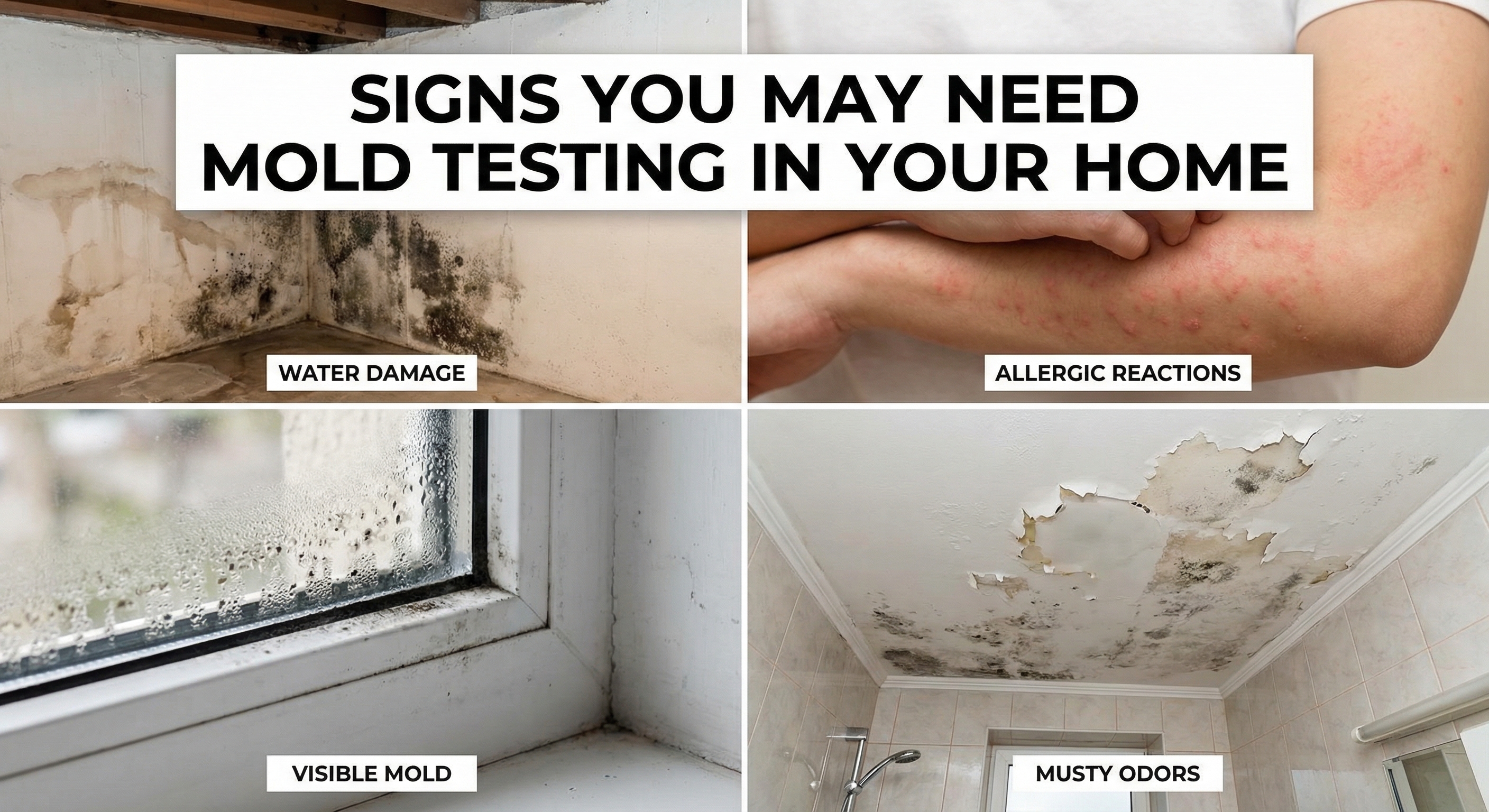
Common warning signs that you need mold testing include musty odors, visible discoloration on walls or ceilings, recurring allergy symptoms, a history of water damage, and persistent humidity problems. Mold can grow hidden behind walls, beneath flooring, and inside HVAC systems without any visible trace, making these indirect indicators critically important. If you notice any combination of these signs, professional mold testing is the most reliable way to determine whether mold is present, identify the species, and understand the severity of the problem.
Key Takeaway
Common warning signs that you need professional mold testing include persistent musty odors, visible discoloration on walls or ceilings, recurring allergic symptoms indoors, recent water damage, and chronically high indoor humidity above 60%.
According to the CDC, mold exposure can cause nasal stuffiness, throat irritation, coughing, wheezing, eye irritation, and skin irritation. People with mold allergies may experience more severe reactions, and individuals with compromised immune systems or chronic lung conditions are at risk for serious infections. The EPA estimates that indoor air quality problems, including mold contamination, affect one in every four buildings in the United States. Knowing the signs of a potential mold problem can help you act before a small issue becomes a major health concern.
What Does a Musty Smell in Your Home Mean?
A persistent musty or earthy odor is one of the earliest and most reliable indicators of hidden mold growth. This smell is produced by microbial volatile organic compounds (MVOCs), which are gases released by mold colonies as they feed on organic materials like wood, drywall, and insulation. The odor may be strongest in enclosed areas such as basements, crawl spaces, closets, and bathrooms.
What makes musty odors particularly concerning is that they often indicate mold growing in hidden locations where it cannot be seen. You may smell mold behind walls, under carpet padding, or inside HVAC ductwork without ever seeing a single spot of visible growth. If you notice a persistent musty smell that does not go away with cleaning or ventilation, professional mold testing can determine whether active mold growth is the source.
Is Visible Discoloration Always Mold?
Visible discoloration on walls, ceilings, or around windows is a strong indicator of mold growth, but not all staining is mold. Dark spots, fuzzy patches, or discoloration that appears green, black, white, orange, or gray on surfaces may be mold, but it could also be dirt, mineral deposits, or water staining. The key distinction is that mold discoloration typically has a slightly raised or textured appearance, spreads over time, and is often accompanied by a musty odor.
If you see visible discoloration in your home, do not attempt to identify the mold type on your own based on color alone. Color is not a reliable indicator of mold species. Black mold, for example, is a term commonly associated with Stachybotrys chartarum, but dozens of mold species can appear black. Professional testing with laboratory analysis is the only way to accurately identify the species present and assess the health risk.
Can Water Damage Cause Mold Even After the Area Dries?
Yes. A history of water damage is one of the most important risk factors for hidden mold growth. Whether caused by a burst pipe, roof leak, flooding, or appliance malfunction, water intrusion creates the moisture conditions mold needs to thrive. The EPA states that mold can begin growing on damp materials within 24 to 48 hours, and even after the visible water is cleaned up, residual moisture trapped in wall cavities, subfloor layers, and insulation can sustain mold growth for weeks or months.
If your home experienced water damage in the past, even if the area appears dry and was cleaned up, mold may have established colonies in concealed spaces. This is especially true if drying was not completed within 48 hours of the water event, if professional water extraction equipment was not used, or if the affected materials were not fully removed and replaced. For more details on the timeline of mold growth following water intrusion, see our guide on how long mold takes to grow after water damage.
Seeing signs of mold in your home? Call (864) 619-2092 or schedule a free consultation today.
Does Condensation on Windows Mean You Have a Mold Problem?
Condensation on windows, pipes, or cold surfaces is a sign of excessive indoor moisture, which is a primary driver of mold growth. When warm, humid indoor air contacts a cooler surface, water droplets form. This condensation provides the surface moisture that mold spores need to germinate and grow. Persistent condensation, particularly on interior window panes and frames, often leads to visible mold growth in window sills, surrounding drywall, and behind window trim.
Condensation problems are especially common in older homes with single-pane windows, in homes with poor ventilation, and during cold weather when the temperature difference between indoor and outdoor air is greatest. If you frequently see condensation forming on your windows, it is a sign that your indoor humidity levels are too high and that conditions are favorable for mold growth throughout your home.
Why Do Allergy Symptoms Indicate a Mold Problem?
Recurring allergy symptoms that seem to worsen when you are at home and improve when you leave are a classic indicator of an indoor air quality problem, and mold is one of the most common causes. Mold spores are potent airborne contaminants that trigger immune responses including sneezing, runny nose, itchy and watery eyes, nasal congestion, and post-nasal drip. The CDC notes that these symptoms can affect anyone, but people with existing allergies or asthma are particularly susceptible.
What makes mold-related allergy symptoms distinct from seasonal allergies is their persistence and their connection to specific indoor environments. Seasonal allergies typically follow pollen cycles and affect you both indoors and outdoors. Mold allergies from indoor contamination tend to be year-round and are noticeably worse when you spend extended time in the affected building. If you or your family members experience unexplained allergy symptoms that follow this pattern, indoor air quality testing can help identify the specific contaminants responsible.
Can Mold Cause Respiratory Problems Beyond Allergies?
Beyond typical allergy symptoms, mold exposure can cause more serious respiratory issues. Persistent coughing, wheezing, shortness of breath, chest tightness, and recurring sinus or upper respiratory infections can all be linked to indoor mold exposure. The CDC reports that exposure to damp indoor environments is associated with a 30 to 50 percent increase in respiratory and asthma-related health outcomes.
Certain mold species produce mycotoxins, which are toxic compounds that can cause more severe health effects with prolonged exposure. Individuals with asthma may experience more frequent and severe attacks. People with compromised immune systems, including those undergoing chemotherapy, organ transplant recipients, and people with HIV/AIDS, are at elevated risk for invasive mold infections. If respiratory symptoms are new, worsening, or unexplained, mold contamination should be investigated as a potential cause.
What Do Peeling Paint and Bubbling Wallpaper Tell You?
Peeling, cracking, or bubbling paint and wallpaper are often signs of moisture accumulation within walls. When moisture migrates through drywall from a hidden leak, condensation, or rising damp, it disrupts the bond between the paint or wallpaper and the wall surface. This same moisture creates ideal conditions for mold growth on the backside of the drywall, behind the wallpaper, or within the wall cavity itself.
If you notice paint peeling or wallpaper bubbling in areas that have not been recently painted or where there is no obvious cause, investigate for moisture problems. The visible surface damage is often the tip of the iceberg, with more extensive mold growth occurring behind the wall where it cannot be seen.
How Does High Humidity Lead to Mold Growth?
The EPA recommends keeping indoor relative humidity between 30 and 50 percent. When humidity consistently exceeds 60 percent, mold growth becomes increasingly likely on virtually any organic surface in your home, including wood, drywall, carpet, fabric, and even dust. High humidity does not require a specific water event or leak; the moisture in the air alone is sufficient to support mold colonization.
Common causes of high indoor humidity include poor ventilation, oversized or malfunctioning HVAC systems, unvented bathrooms and kitchens, damp basements and crawl spaces, and climate conditions in the southeastern United States. Homes in South Carolina, North Carolina, and Georgia are particularly susceptible to humidity-related mold problems due to the warm, humid climate. For a deeper understanding of the relationship between humidity and mold, read our article on what humidity level causes mold.
When Should You Test Versus Wait?
Not every suspicion warrants immediate testing. If you see a small patch of mold on a bathroom tile or shower caulk, surface cleaning with appropriate products may be sufficient. The EPA generally advises that mold growth on hard surfaces covering less than 10 square feet can often be cleaned by the homeowner without professional involvement.
However, you should schedule professional mold testing if any of the following apply:
- You detect musty odors but cannot locate the source
- You see mold covering an area larger than 10 square feet
- Mold returns after cleaning
- You have experienced significant water damage
- You or family members are experiencing unexplained health symptoms
- You are buying or selling a home and want documented air quality data
- You need verification before and after professional remediation to confirm the problem has been resolved
Why Are DIY Mold Test Kits Unreliable?
DIY mold test kits available at hardware stores typically use settle plates or petri dishes that collect mold spores from the air by gravity. While these kits will almost always grow mold colonies (because mold spores are naturally present in every indoor environment), they provide virtually no useful information. They cannot tell you whether your indoor mold levels are elevated compared to the outdoor baseline, they cannot accurately identify species, and they do not use the controlled sampling methods required for reliable results.
Professional mold testing uses calibrated air sampling pumps that draw a precise volume of air through a collection cassette. These samples are analyzed by accredited laboratories using direct microscopy or culturable methods. Indoor results are compared to simultaneously collected outdoor samples to determine whether indoor mold levels are abnormally elevated. This methodology provides the accurate, actionable data needed to make informed decisions about your health and your home. Learn more about professional testing methods in our guide to indoor air quality testing.
What Happens During a Professional Mold Inspection?
A professional mold inspection begins with a thorough visual assessment of your property, checking for visible mold growth, water staining, moisture intrusion points, condensation, and ventilation problems. The inspector uses moisture meters and thermal imaging cameras to detect hidden moisture behind walls, under flooring, and around plumbing.
Air samples are then collected from multiple locations throughout the home, along with at least one outdoor control sample. Surface samples may also be taken from suspicious areas using swabs or tape lifts. All samples are sent to an accredited laboratory for species identification and quantification. The final report details the types and concentrations of mold found, compares indoor levels to outdoor baselines, identifies moisture sources, and provides recommendations for remediation if needed.
With over 25 years of experience and SCDES licensing, A1 Air Quality Consultants provides independent, science-based mold testing you can trust.
Need professional testing? Contact A1 Air Quality Consultants or call (864) 619-2092 for a free consultation.