
March 4, 2026 · By A1 Air Quality Consultants
Last updated: November 11, 2026
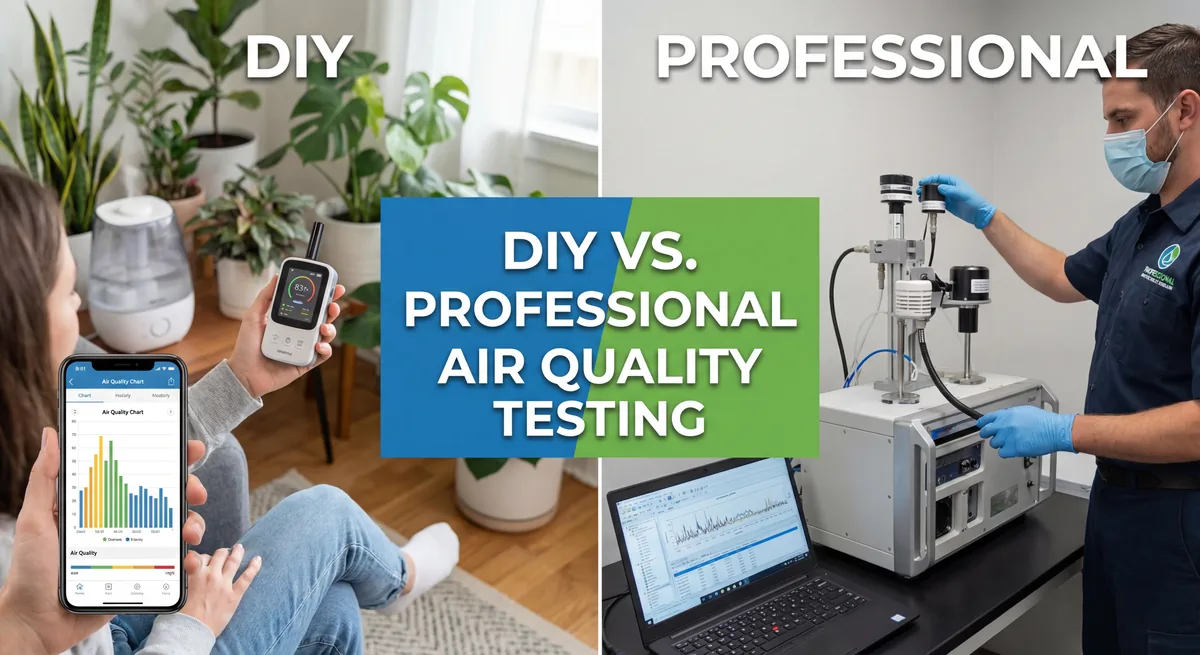
DIY kits and professional assessments answer different questions; neither is a test for every indoor pollutant. A correctly used radon kit can provide useful measurements, while a professional assessment can help define a sampling plan and interpret findings in the context of a property. Compare the method, its limitations, and the report you need before choosing an option.
Key Takeaway
Choose testing for a defined question, not a blanket promise of safe air. A consumer monitor measures only the pollutants its sensors support. Professional help may be useful when you need an investigation, a documented sampling plan, or interpretation. Confirm any transaction or project requirements in advance; a mold result does not diagnose illness or establish that a building is safe for everyone.
Home air quality test kits are available at hardware stores and online retailers. Their usefulness depends on what they measure, how they are used, and the question you need answered. Before choosing a kit or a professional assessment, check the instructions, laboratory fees if applicable, and the limits of the results.
What Are DIY Air Quality Test Kits?
DIY air quality test kits are consumer products designed to detect specific pollutants in your home. They are available for mold, radon, formaldehyde, lead, VOCs, and general air quality. Most kits fall into two categories:
- Collection kits: Some kits collect a sample for laboratory analysis, while others provide a result at home. The collection procedure and exposure period depend on the particular test. Check whether analysis and return shipping are included in the price.
- Electronic monitors: Depending on their sensors, consumer monitors may measure particulate matter, humidity, temperature, CO2, or selected gases. They do not measure every pollutant. EPA explains that monitor price does not necessarily indicate performance; follow the manufacturer's instructions and check which measurements the device actually supports.
These products may help identify changes associated with activities or conditions in a room. A reading alone does not explain every source or health concern. Discuss persistent or concerning symptoms with a healthcare professional rather than using a kit to diagnose their cause.
What Does Professional Air Quality Testing Include?
Professional indoor air quality testing should start with the property concern and an agreed scope. Ask a provider to explain which of the following are included:
- Initial consultation: A discussion of the concern, building history, affected areas, and question the investigation is intended to answer.
- Visual inspection: A review of accessible areas for relevant moisture conditions, ventilation concerns, and possible pollutant sources.
- Selected measurements or samples: The proposed equipment, collection method, sample locations, and applicable calibration or quality-control procedures.
- Laboratory analysis, when needed: The laboratory and method proposed for the particular samples. Ask about relevant qualifications or accreditation for that analysis rather than assuming every test uses an accredited laboratory.
- Reporting and limitations: The observations, results, methods, and follow-up within the agreed scope. Ask which comparison criteria are applicable and what the results cannot establish.
To learn more about what a comprehensive assessment involves, read our guide on what is indoor air quality testing.
How Accurate Are Home Mold Test Kits?
Mold occurs both indoors and outdoors. Growth on a settling plate does not by itself show that a building has a moisture problem or establish a health risk. CDC does not recommend home mold testing, and identifying the type of mold is not necessary before addressing visible growth and its moisture source.
Professional mold testing can be considered when sampling will answer a defined investigation question. EPA says sampling is usually unnecessary when mold is visible and notes that no federal limits for mold or mold spores exist. When sampling is appropriate, the plan and interpretation matter; the detail reported depends on the collection and analysis method, not a universal promise of species-level identification.
If you notice signs that you may need mold testing, discuss the moisture history and affected areas before ordering samples. An assessment can help clarify the investigation, but a mold sample cannot determine whether an individual will become ill.
Are Home Radon Test Kits Reliable?
DIY radon testing is a recognized option when the device is suitable and its instructions are followed. CDC describes both DIY kits and qualified radon testers. Short-term kits measure for 2–90 days, depending on the device; long-term tests run for more than 90 days and better reflect longer-term conditions.
Follow the device's placement, testing-period, and closed-house instructions where required. A short-term result reflects that test period, not necessarily the home's year-round average. Ask your state radon program or a qualified tester about follow-up testing and the documentation needed for your situation.
For a home purchase or sale, EPA recommends using a qualified tester. Confirm the applicable testing protocol and transaction requirements before arranging professional radon testing; do not assume that every transaction requires the same device. Learn more about radon in our area in our article on radon levels in South Carolina, North Carolina, Georgia, and Tennessee.
Need reliable air quality results you can trust? Call (864) 619-2092 or schedule a free consultation today.
When Should You Choose Professional Testing?
Professional help may be useful when the question needs an investigation or specific documentation. Confirm the scope and any applicable requirements before booking:
- Real estate transactions: Ask the parties involved which tests, tester qualifications, and documentation they require. Requirements differ by pollutant, property, and transaction.
- Health concerns: Discuss symptoms with a healthcare professional. An environmental assessment can investigate selected building conditions but does not diagnose an illness or prove what caused it.
- Post-remediation verification: Agree on the inspection, sampling if needed, and acceptance criteria for the particular project. A result should not be described as a universal certificate of safe air.
- Legal or insurance documentation: Confirm the required methods, qualifications, and records with the relevant adviser or insurer before testing; do not assume any report will automatically be accepted.
- Commercial buildings: Define the workplace or facility question, occupied areas, operating conditions, and reporting requirements. Not every indoor-air concern calls for the same samples or measurements.
Cost Comparison: DIY vs Professional
Compare the full cost and purpose of each option. A kit price may exclude laboratory analysis, shipping, or interpretation. A professional quote should identify the inspection, samples, laboratory methods, and reporting included. Prices vary by provider and scope; contact A1 for a current project quote.
A useful comparison is whether the proposed work can answer your question. An inexpensive result that is not relevant to the decision may not help, and a more expensive assessment does not guarantee that every cause will be identified. Ask what you will receive, how findings will be interpreted, and whether additional work could be needed.
For a more detailed breakdown of professional testing costs, see our guide on how much air quality testing costs.
Discuss the testing that fits your question. Contact A1 Air Quality Consultants or call (864) 619-2092 for a free consultation.