
July 9, 2025 · By A1 Air Quality Consultants
Last updated: March 4, 2026
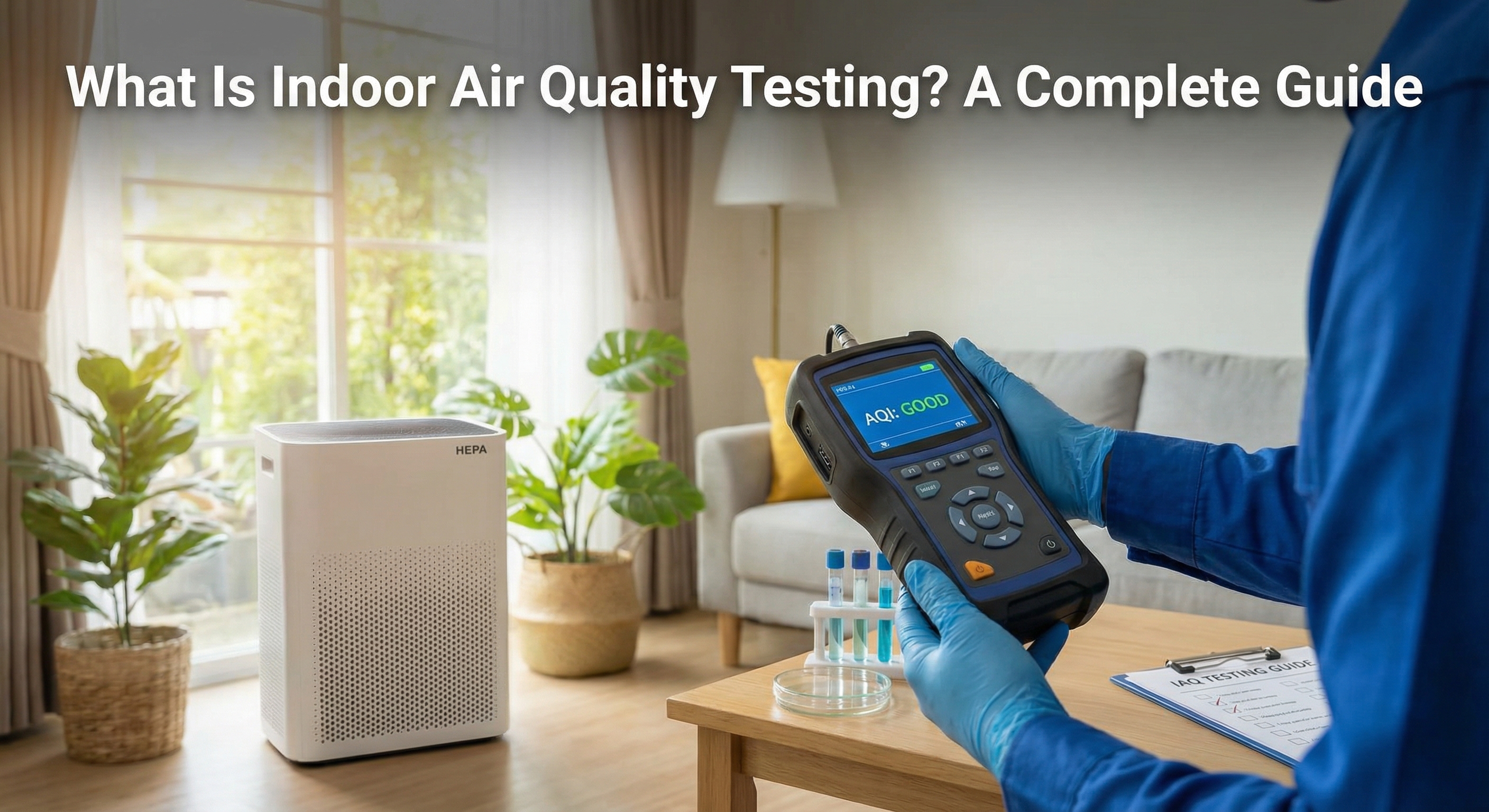
Air quality (IAQ) testing is the process of measuring and analyzing pollutants, airborne contaminants, and environmental conditions inside a building to determine whether the air is safe to breathe. Professional IAQ testing uses calibrated instruments and accredited laboratory analysis to identify contaminants such as volatile organic compounds (VOCs), mold spores, airborne particulates, carbon dioxide, carbon monoxide, and particulate matter. The results help homeowners and building managers understand exactly what is in their air and take targeted steps to improve it.
Key Takeaway
Air quality testing measures pollutants like VOCs, mold spores, airborne contaminants, CO2, and particulates in your home or building. A certified professional collects air and surface samples that are analyzed by an accredited lab, with most results available within 48 to 72 hours.
According to the EPA, Americans spend approximately 90 percent of their time indoors, where pollutant concentrations can be two to five times higher than outdoor levels. For some pollutants, indoor levels may be up to 100 times higher than outdoors. Despite these facts, most people have never had their air professionally tested. Understanding what IAQ testing is and when you need it is the first step toward protecting your health and the health of everyone in your home or workplace.
Why Does Air Quality Matter?
Poor air quality is linked to a wide range of health problems. The EPA ranks indoor air pollution among the top five environmental risks to public health. Short-term exposure to indoor air pollutants can cause headaches, dizziness, fatigue, and irritation of the eyes, nose, and throat. Long-term exposure has been associated with respiratory disease, heart disease, and even cancer.
The CDC reports that approximately 25 million Americans have asthma, and airborne contaminants and pollutants are among the most common triggers for asthma attacks. Children, the elderly, and individuals with pre-existing respiratory conditions are especially vulnerable to the effects of poor air quality. In commercial settings, poor IAQ has been shown to reduce worker productivity by up to 10 percent, increase absenteeism, and contribute to what is known as sick building syndrome.
The challenge is that many indoor air pollutants are invisible and odorless. You cannot see VOCs being off-gassed from new furniture, detect elevated carbon dioxide from poor ventilation, or identify specific mold species without proper testing equipment. This is why professional air quality testing is so important: it reveals the problems you cannot detect on your own.
What Pollutants Are Measured During IAQ Testing?
A comprehensive air quality test can measure a wide variety of pollutants depending on the concerns and symptoms present. The most commonly tested contaminants include:
- Volatile Organic Compounds (VOCs): Chemical gases emitted by paints, cleaning products, building materials, furniture, and adhesives. Common VOCs include formaldehyde, benzene, toluene, and xylene. The EPA has found that levels of several organic pollutants average two to five times higher indoors than outdoors. Learn more in our guide to VOC testing and volatile organic compounds.
- Mold Spores: Airborne mold spores are measured through air sampling and compared to outdoor baseline levels. Elevated indoor spore counts indicate active mold growth. Species identification helps assess health risk, as some types like Stachybotrys and Chaetomium are associated with more serious health effects.
- Airborne Contaminants: Dust mites, pet dander, pollen, and other airborne particulates can all be present in indoor air and on surfaces. Testing identifies the specific contaminants contributing to symptoms.
- Carbon Dioxide (CO2): Elevated CO2 levels indicate inadequate ventilation. The ASHRAE standard recommends keeping indoor CO2 below 1,000 parts per million. Levels above this threshold can cause drowsiness, headaches, and difficulty concentrating.
- Carbon Monoxide (CO): A dangerous, odorless gas produced by fuel-burning appliances such as furnaces, water heaters, and gas stoves. Even low-level exposure can cause headaches and dizziness, while high levels can be fatal.
- Particulate Matter (PM2.5 and PM10): Fine particles from cooking, smoking, candles, dust, and outdoor pollution that penetrate deep into the lungs. The EPA sets National Ambient Air Quality Standards for particulate matter, and indoor levels often exceed outdoor levels in poorly ventilated homes.
- Humidity: Relative humidity is measured to assess conditions that promote mold growth. The EPA recommends maintaining indoor humidity between 30 and 50 percent.
When Do You Need Air Quality Testing?
Not every home or building requires IAQ testing, but there are specific situations where testing is strongly recommended. You should consider scheduling a professional IAQ test if you experience any of the following:
- Unexplained health symptoms: Persistent headaches, fatigue, respiratory irritation, sneezing, coughing, or allergy-like symptoms that improve when you leave the building and return when you come back are classic signs of an air quality problem.
- Musty odors or visible mold: Odors or discoloration on walls, ceilings, or around windows suggest mold growth. Professional testing determines the type and concentration of mold present. Read more about signs you may need mold testing.
- After water damage or flooding: Water intrusion creates ideal conditions for mold growth and can release contaminants from building materials.
- During or after renovation: Construction activities can release asbestos fibers, lead dust, VOCs from new materials, and particulate matter into your air.
- New home or building purchase: Baseline IAQ testing gives you a clear picture of the air quality before you move in.
- Vulnerable occupants: Homes with infants, young children, elderly residents, pregnant women, or anyone with asthma or compromised immune systems benefit from proactive IAQ testing.
- Commercial buildings with complaints: If multiple employees report headaches, fatigue, or respiratory issues, IAQ testing can identify the source and guide corrective action.
Wondering what's in the air you breathe? Call (864) 619-2092 or schedule a free consultation today.
What Should You Expect During a Professional IAQ Test?
A professional air quality assessment typically follows a structured process designed to capture accurate, representative data about your indoor environment. Here is what you can expect:
Initial consultation: The testing professional will discuss your concerns, symptoms, and the history of the building. This helps determine which specific tests are most appropriate for your situation.
Visual inspection: Before any samples are collected, the technician conducts a visual inspection of the property, looking for signs of moisture intrusion, water damage, visible mold, ventilation issues, and potential sources of contamination.
Sample collection: Depending on the pollutants being tested, the technician may collect air samples using calibrated pumps, surface samples using swabs or tape lifts, dust samples, or real-time readings with handheld monitors. For mold testing, both indoor and outdoor air samples are collected so that indoor levels can be compared to the outdoor baseline.
Environmental measurements: Temperature, humidity, CO2, and CO levels are typically recorded throughout the property using digital instruments.
Lab analysis: Collected samples are sent to an accredited laboratory for analysis. Air samples for mold are typically analyzed using direct microscopy or culturable methods. VOC samples may be analyzed using gas chromatography. Most lab results are available within 48 to 72 hours.
Report and recommendations: Once lab results are received, the testing company prepares a detailed report that includes the specific contaminants identified, their concentrations, comparisons to established health guidelines, and actionable recommendations for improvement.
How Are Air Quality Results Interpreted?
Interpreting IAQ results requires comparing measured levels against established benchmarks and health guidelines. There is no single pass-or-fail threshold for air quality, but several organizations provide reference values that professionals use to evaluate results.
For mold spore counts, indoor levels are compared to outdoor baseline samples. If indoor counts are significantly higher than outdoor counts, or if certain indicator species are present indoors but not outdoors, this suggests active indoor mold growth. Species like Stachybotrys and Chaetomium are considered water-damage indicators and warrant attention even at low counts.
For VOCs, the EPA does not set enforceable indoor air standards, but organizations like the World Health Organization (WHO) and various state agencies provide guideline values. Total VOC (TVOC) levels below 300 micrograms per cubic meter are generally considered acceptable, while levels above 500 may warrant investigation.
CO2 levels above 1,000 ppm suggest inadequate ventilation. Carbon monoxide should ideally be undetectable indoors; any sustained reading above 9 ppm is a concern. Humidity levels outside the 30 to 50 percent range indicate conditions that either promote mold growth (too high) or cause respiratory irritation (too low).
A qualified IAQ professional will put all of these numbers into context for your specific situation, explaining what the results mean for your health and providing clear, prioritized recommendations. As noted in our article on air quality, health, and productivity, understanding your test results is key to taking effective corrective action.
Why Choose Independent Testing?
When selecting an IAQ testing provider, independence matters. Companies that offer both testing and remediation services have a financial incentive to find problems and recommend expensive fixes. An independent, testing-only company like A1 Air Quality Consultants has no conflict of interest. Our sole purpose is to provide you with accurate data and honest recommendations.
With over 25 years of experience and SCDES/AHERA certifications, A1 Air Quality Consultants delivers independent, science-based results you can trust. We serve homes and businesses across North Carolina, South Carolina, and Georgia. Every sample we collect is analyzed by an accredited laboratory, and our reports are designed to be clear, detailed, and useful whether you are a homeowner, property manager, or building professional.
Need professional testing? Contact A1 Air Quality Consultants or call (864) 619-2092 for a free consultation.