
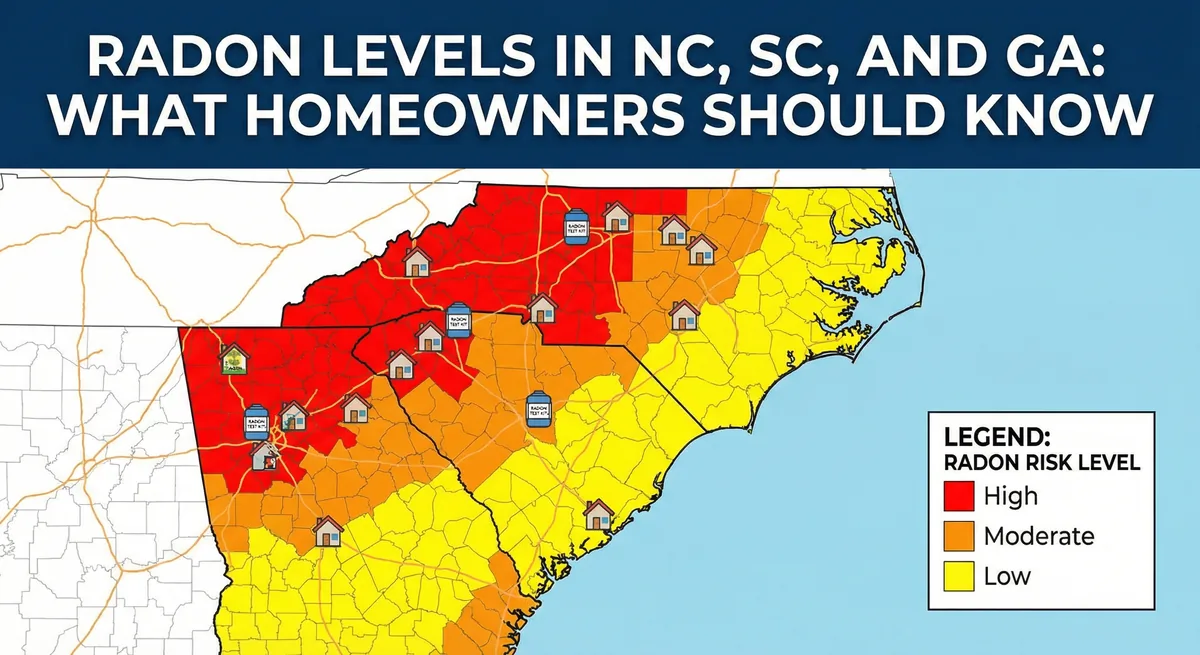
A regional radon map is background information, not a result for your home. EPA cautions that its zone map should not be used to decide whether an individual home needs testing. Use a property measurement to inform your decision, wherever the address falls on the map.
What a regional map can tell you
A map can help agencies and communities understand regional patterns and plan radon programs. It cannot describe the concentration in a particular occupied room. Avoid translating a county category into a promise that a property is free of concern or a prediction of its test result.
The same question applies across state lines
For a property in North Carolina, South Carolina, Georgia, or Tennessee, begin with its layout, use, prior reports, and reason for measurement. A home purchase, a newly occupied lower room, and follow-up after building changes may have different scheduling and documentation needs.
Keep previous measurements useful
Retain the complete report with dates, locations, method, and recorded conditions. Note later changes to the building or a radon system. Those records help a testing provider discuss the present question; a past result should not be treated as permanent evidence for every future room layout or use.
Plan around access and normal operation
Explain whether the property is occupied, seasonally used, vacant, or managed from a distance. Arrange access for the selected measurement and identify who can follow its instructions. Record any interruption so the provider can explain whether it affects the result.
Find service for the actual property
A1 lists communities across four states in the service-area directory. Call to confirm availability and travel arrangements for the address, then discuss the radon-testing scope and complete schedule. For a remotely managed property, identify who will provide access and follow the monitoring instructions while the device is in place.