
July 30, 2025 · By A1 Air Quality Consultants
Last updated: March 4, 2026
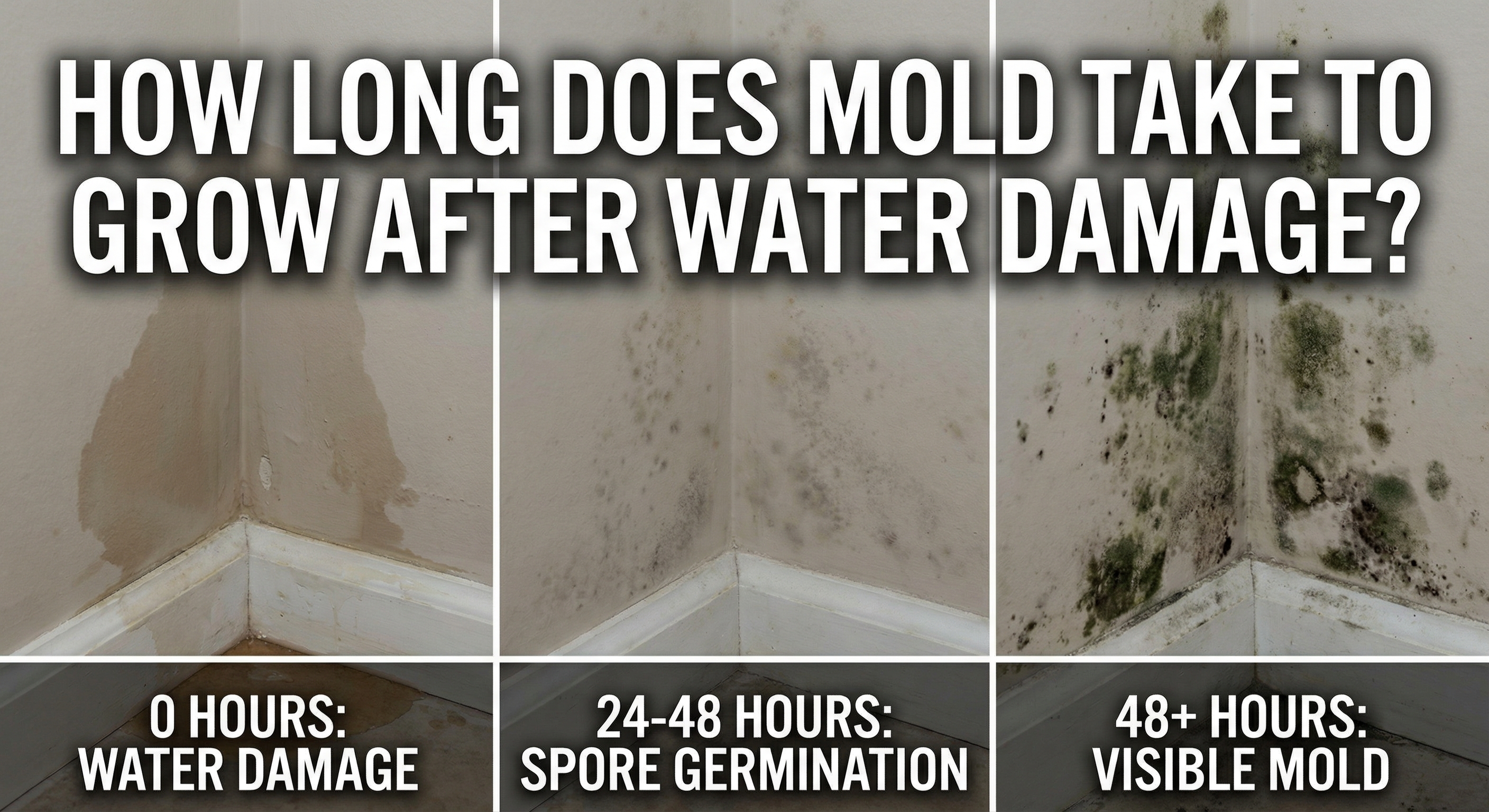
Mold can begin growing within 24 to 48 hours after water damage occurs. Mold spores are naturally present in virtually every indoor and outdoor environment. When these spores land on a damp surface with an organic food source — such as drywall, wood, carpet, or insulation — they can germinate and begin forming colonies in as little as one day. According to the EPA, mold growth should be expected on wet materials that are not dried within this 24-to-48-hour window, which is why fast action after any water event is critical.
Key Takeaway
Mold can begin growing within 24 to 48 hours after water damage when moisture, warmth, and organic material are present. Acting quickly to dry affected areas and scheduling professional mold testing are the most effective ways to prevent hidden mold growth.
Whether the water damage comes from a burst pipe, a roof leak, flooding, or a malfunctioning appliance, the clock starts ticking immediately. Understanding the timeline of mold growth, the conditions that accelerate it, and when to seek professional mold testing can mean the difference between a minor cleanup and a major remediation project.
What Is the Timeline of Mold Growth After Water Damage?
Mold growth after water damage follows a predictable progression. While the exact timeline varies based on environmental conditions, the general stages are well documented:
- 0 to 24 hours: Water saturates building materials. Mold spores already present in the air begin settling on wet surfaces. No visible growth is present, but the conditions for germination are being established. This is the most critical window for drying.
- 24 to 48 hours: Spores begin to germinate on wet organic materials. Microscopic mold growth begins, typically invisible to the naked eye. The EPA identifies this as the threshold beyond which mold growth becomes likely if materials remain wet.
- 3 to 7 days: Mold colonies become established. Growth may still be hidden behind walls, under flooring, or inside HVAC ducts. Musty odors may become noticeable. Airborne mold spore counts begin to rise.
- 1 to 2 weeks: Visible mold colonies appear on surfaces. Colors range from black, green, and white to gray and orange depending on the species. Structural colonization of drywall, wood framing, and insulation accelerates. Health symptoms may develop in occupants.
- 2 to 4 weeks and beyond: Without intervention, mold spreads to adjacent dry materials through airborne spore dispersal. The contamination area can expand significantly beyond the original water-damaged zone. Remediation becomes increasingly complex and expensive.
What Conditions Accelerate Mold Growth?
While moisture is the essential trigger, several environmental factors determine how quickly mold colonizes after water damage. Understanding these conditions helps explain why some water events lead to rapid mold problems while others do not.
Temperature: Mold thrives in temperatures between 60 and 80 degrees Fahrenheit, which is the same range most homes are kept at year-round. The warm, humid climate across South Carolina, North Carolina, and Georgia creates especially favorable conditions for mold growth. During summer months, the combination of heat and humidity can accelerate mold development significantly.
Humidity: The EPA recommends keeping indoor relative humidity between 30 and 50 percent to discourage mold growth. After water damage, humidity in affected areas can spike to 70, 80, or even 90 percent — far above the threshold where mold flourishes. Learn more about the relationship between humidity and mold in our guide on what humidity level causes mold.
Organic material: Mold feeds on organic materials including drywall paper, wood, carpet fibers, insulation backing, dust, and wallpaper adhesive. Homes are essentially filled with mold food sources, which means moisture is the only missing ingredient.
Poor ventilation: Areas with limited airflow — such as closets, crawl spaces, attics, and wall cavities — dry slowly and trap moisture, creating ideal conditions for mold colonization. Bathrooms and basements are particularly vulnerable.
Type of water: The source of water matters. Clean water from a supply line break poses the lowest initial risk but will support mold growth if not dried. Gray water from appliance overflows carries some contaminants. Black water from sewage backups or flooding carries bacteria and organic matter that can accelerate microbial growth.
What Should You Do Immediately After Water Damage?
The actions you take in the first 24 to 48 hours after water damage are the most important factor in preventing mold growth. Here is a step-by-step approach:
- Stop the water source: If the water is coming from a plumbing failure or appliance, shut off the supply immediately. For roof leaks, contain the water with buckets and tarps until repairs can be made.
- Document the damage: Take photographs and video of all affected areas before beginning cleanup. This documentation is essential for insurance claims.
- Remove standing water: Use a wet-dry vacuum, mop, or pump to remove as much standing water as possible. The faster you remove the bulk water, the better your chances of preventing mold.
- Increase airflow: Open windows if outdoor humidity is low, run fans, and use dehumidifiers to begin drying the affected area. Commercial-grade dehumidifiers and air movers are significantly more effective than household units.
- Remove saturated materials: Wet carpet padding, heavily soaked insulation, and severely water-damaged drywall often cannot be fully dried and may need to be removed. Porous materials that remain wet are prime candidates for mold colonization.
- Monitor hidden areas: Water follows gravity and wicks through building materials. Check adjacent rooms, lower floors, and crawl spaces for moisture migration. Wall cavities, subfloors, and ceiling voids are common areas where hidden water accumulates.
Dealing with water damage? Get mold testing before it spreads. Call (864) 619-2092 or schedule a free consultation today.
When Should You Get Professional Mold Testing After Water Damage?
Professional mold testing is recommended in several situations following water damage. While not every minor spill requires testing, the following scenarios warrant a professional assessment:
- Drying was delayed beyond 48 hours: If water-damaged materials were not dried within the critical 24-to-48-hour window, mold growth is likely and testing can confirm whether spore counts are elevated.
- Musty odors are present: A persistent musty smell after water damage is one of the most reliable indicators of hidden mold growth. Air sampling can detect elevated spore counts even when no visible mold is present. Review the signs that you may need mold testing for more detail.
- Water affected hidden areas: If water entered wall cavities, crawl spaces, HVAC ductwork, or areas beneath flooring, visual inspection alone cannot confirm whether mold has developed. Professional testing with moisture meters and air sampling provides the data you need.
- Health symptoms develop: If occupants begin experiencing respiratory irritation, allergic reactions, headaches, or other symptoms after a water event, indoor air quality testing can determine whether mold or other contaminants are the cause.
- Before reoccupying a flooded property: After major flooding or extensive water damage, testing before moving back in ensures the indoor environment is safe. This is particularly important for homes with children, elderly residents, or individuals with respiratory conditions.
- Insurance documentation: Many insurance claims require professional documentation of mold contamination. Lab-analyzed test results from an independent testing company provide the objective evidence that insurers require.
Why Does Professional Testing Matter More Than DIY Kits?
After water damage, some homeowners consider using store-bought mold test kits to check for problems. While understandable, these kits have significant limitations that can lead to misleading results.
DIY settle-plate kits simply expose a petri dish to the air for a set period. Because mold spores are always present in indoor and outdoor air, these kits will virtually always show mold growth — leading to unnecessary alarm. They cannot tell you whether the spore levels are normal or elevated, and they cannot identify the specific species present.
Professional mold testing uses calibrated air sampling pumps that draw a precise volume of air through a collection cassette. The sample is then analyzed by an accredited laboratory using direct microscopy, which identifies and quantifies specific mold species. Indoor results are compared to outdoor baseline samples to determine whether indoor levels are abnormally elevated. This scientific approach provides accurate, actionable data that DIY kits simply cannot match.
As discussed in our complete guide to indoor air quality testing, the quality of your testing methodology directly determines the quality of the information you receive.
How Can You Prevent Mold Growth After Water Damage?
Prevention is always more effective and less expensive than remediation. Following these guidelines after any water event significantly reduces your risk of mold development:
- Act within 24 hours: Begin drying immediately. Every hour counts during the first 24 to 48 hours after water damage.
- Use professional drying equipment: Commercial dehumidifiers and air movers dry materials far more effectively than household fans. Water restoration companies can provide these if needed.
- Monitor humidity levels: Keep indoor relative humidity below 50 percent throughout the drying process. Use a hygrometer to verify levels.
- Check for hidden moisture: Use a moisture meter to check walls, floors, and ceilings. Materials that feel dry on the surface can retain dangerous levels of moisture inside.
- Do not seal up wet areas: Never paint over, carpet over, or enclose areas that have not been fully dried. Trapping moisture behind finished surfaces creates ideal conditions for hidden mold growth.
- Schedule post-event testing: If you have any doubt about whether mold has developed, professional testing provides definitive answers and peace of mind.
With over 25 years of experience and SCDES licensing, A1 Air Quality Consultants provides independent, science-based mold testing you can trust. Our certified inspectors use calibrated equipment and accredited laboratory analysis to give you accurate, actionable results after any water event.
Need professional testing? Contact A1 Air Quality Consultants or call (864) 619-2092 for a free consultation.