
September 24, 2025 · By A1 Air Quality Consultants
Last updated: March 4, 2026
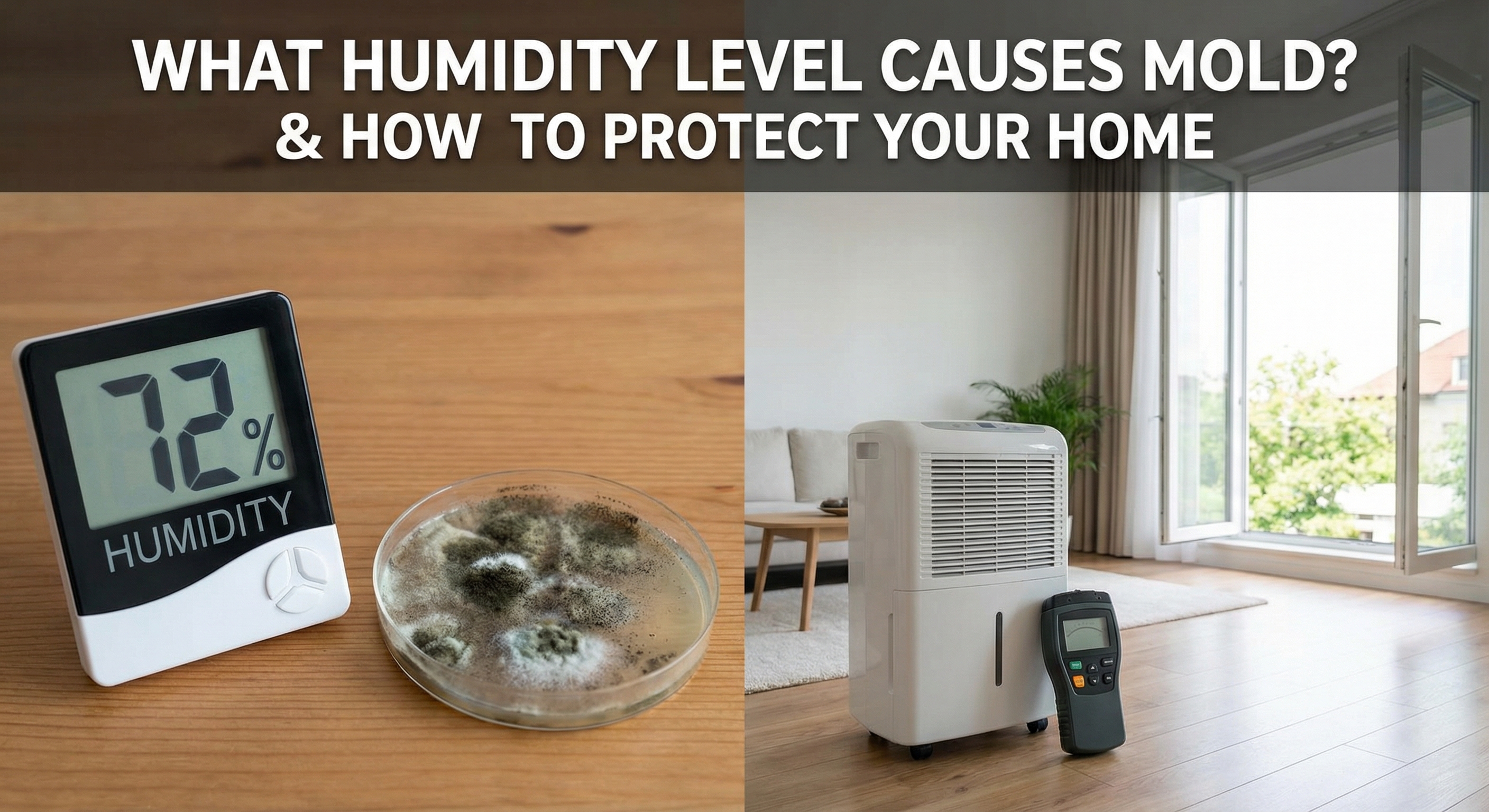
Indoor humidity levels above 60% create the conditions mold needs to grow and spread. The EPA recommends keeping indoor relative humidity between 30% and 50% to prevent mold growth and maintain healthy air quality. When moisture levels remain elevated for extended periods, mold can begin colonizing surfaces within 24 to 48 hours, turning a humidity problem into a potential health hazard that requires professional remediation. Understanding how humidity drives mold growth is the first step toward protecting your home and your family.
Key Takeaway
Indoor humidity above 60% creates ideal conditions for mold growth. The EPA recommends maintaining indoor humidity between 30% and 50% to prevent mold, protect your health, and preserve your home.
What Is the Ideal Indoor Humidity Range?
The EPA identifies 30% to 50% relative humidity as the optimal range for indoor comfort and health. Within this range, mold growth is inhibited, dust mites are less likely to thrive, and occupants generally feel comfortable. Humidity below 30% can cause dry skin, irritated respiratory passages, and static electricity, while humidity above 50% begins creating conditions favorable to mold, dust mites, and other biological contaminants.
Relative humidity measures the amount of moisture in the air compared to the maximum amount the air can hold at a given temperature. Warm air holds more moisture than cool air, which is why humidity-related mold problems are especially common in the warm, humid climate of the Southeast, including North Carolina, South Carolina, and Georgia. During summer months, outdoor humidity in these states routinely exceeds 70% to 80%, making indoor moisture control a year-round priority.
The CDC notes that indoor dampness and mold exposure are associated with increased respiratory symptoms, asthma attacks, and allergic reactions. For people with mold allergies, compromised immune systems, or chronic respiratory conditions, maintaining proper humidity levels is not just a comfort issue but a health imperative.
How Does High Humidity Lead to Mold Growth?
Mold requires four things to grow: moisture, a food source (organic material), oxygen, and a suitable temperature range. Of these four requirements, moisture is the factor homeowners have the most control over. When indoor humidity stays above 60%, sufficient moisture is present in the air to sustain mold growth on virtually any organic surface.
Here is what happens when humidity remains elevated:
- Condensation forms: When humid air contacts cooler surfaces like exterior walls, windows, and cold water pipes, moisture condenses on those surfaces. This creates the persistent dampness mold needs to germinate and grow.
- Materials absorb moisture: Drywall, wood, carpet, insulation, ceiling tiles, and other common building materials are porous and readily absorb moisture from the air. Once these materials reach a critical moisture content, they become ideal substrates for mold colonization.
- Mold spores activate: Mold spores are virtually everywhere, floating in both indoor and outdoor air. They remain dormant until they land on a surface with adequate moisture. High humidity provides the persistent dampness that allows dormant spores to germinate, send out root structures (hyphae), and begin producing new spores.
- Growth accelerates: Once established, mold colonies can grow rapidly. The EPA states that mold can begin growing on wet surfaces within 24 to 48 hours. Within days, visible colonies can form, and the mold begins releasing additional spores into the indoor air.
It is important to understand that mold growth does not require standing water or a major leak. Chronically elevated humidity alone is enough to support widespread mold colonization, particularly in enclosed or poorly ventilated spaces. If you have experienced prolonged high humidity or water intrusion, professional mold testing can determine whether mold growth has already begun.
How Can You Measure Humidity in Your Home?
Monitoring indoor humidity is straightforward and inexpensive. A hygrometer, which measures relative humidity, is available at most hardware stores for $10 to $30. Digital hygrometers provide the most accurate and easiest-to-read results.
For the most useful readings, consider these tips:
- Test multiple locations: Humidity levels can vary significantly from room to room. Basements, bathrooms, kitchens, and laundry rooms typically have higher humidity than other areas.
- Monitor over time: A single reading provides a snapshot, but humidity fluctuates throughout the day and with weather changes. Some hygrometers record minimum and maximum readings over time, which is more useful for identifying problem patterns.
- Check problem areas specifically: If you notice condensation on windows, musty odors, or visible moisture on walls, place a hygrometer in those areas to quantify the problem.
- Consider a smart hygrometer: Wi-Fi-enabled hygrometers can send alerts to your phone when humidity exceeds a threshold you set, providing early warning of moisture problems.
Professional indoor air quality testing goes beyond simple humidity measurement to evaluate mold spore counts, identify mold species present in the air, and assess overall air quality conditions in your home.
Struggling with high humidity and mold concerns? Call (864) 619-2092 or schedule a free consultation today.
Which Areas of Your Home Are Most Vulnerable to High Humidity?
Certain areas of the home are inherently more prone to elevated humidity and, consequently, mold growth. Paying special attention to these areas can help you catch and address moisture problems early:
- Bathrooms: Daily showering and bathing generate significant moisture. Bathrooms without exhaust fans or with fans that vent into the attic rather than outside are especially problematic. The CDC recommends running bathroom exhaust fans during and for at least 30 minutes after showering.
- Basements and crawl spaces: These below-grade areas are naturally cooler and more prone to moisture intrusion from the surrounding soil. Groundwater seepage, condensation on foundation walls, and inadequate vapor barriers all contribute to basement humidity problems.
- Kitchens: Cooking, boiling water, and running the dishwasher all add moisture to indoor air. Range hoods that vent outside help, but many kitchens recirculate air instead of exhausting it.
- Laundry rooms: Clothes dryers that are not properly vented to the outside can release large amounts of warm, moist air into the home. Even properly vented dryers can contribute to humidity if the vent connection is leaking.
- Attics: Poor attic ventilation combined with heat radiating from the roof creates conditions where condensation forms on the underside of roof decking, especially during temperature swings. Bathroom or kitchen fans vented into the attic rather than outside compound this problem significantly.
- Closets and enclosed spaces: Poor air circulation in closets, particularly those against exterior walls, allows humidity to build up and mold to grow on clothing, shoes, and stored items.
What Are the Warning Signs of High Humidity in Your Home?
Before mold becomes visible, your home often provides warning signs that humidity is too high. Recognizing these early indicators allows you to take action before mold becomes established:
- Condensation on windows: Water droplets or fog forming on the interior surface of windows, especially in the morning, indicates that indoor humidity is too high relative to the temperature of the glass.
- Musty odors: A persistent musty or earthy smell, even when no mold is visible, often indicates hidden mold growth behind walls, under flooring, or in other concealed areas. This is one of the most common signs you may need mold testing.
- Peeling or bubbling paint: Excess moisture behind walls can cause paint and wallpaper to peel, bubble, or blister.
- Warped wood: Doors that swell and stick, warped hardwood floors, or swelling trim can indicate prolonged exposure to high humidity.
- Damp or clammy feeling: If your home consistently feels damp or clammy, even with the air conditioning running, indoor humidity is likely above the recommended range.
- Water stains: Discoloration on ceilings or walls may indicate both a moisture source and conditions favorable to mold growth.
- Increased allergy symptoms: If household members experience worsening allergies, sneezing, coughing, or respiratory irritation when indoors, elevated humidity and possible mold growth may be contributing factors.
How Can You Prevent Mold by Controlling Humidity?
Keeping indoor humidity within the EPA's recommended 30% to 50% range requires a combination of strategies. Here are the most effective approaches:
- Use dehumidifiers: Portable or whole-house dehumidifiers are the most direct way to reduce indoor humidity. Set them to maintain humidity at or below 50%. Empty and clean portable units regularly, or use models with continuous drain connections.
- Improve ventilation: Ensure bathrooms and kitchens have properly functioning exhaust fans that vent to the outside, not into the attic or crawl space. Run fans during and after moisture-generating activities.
- Run air conditioning: Air conditioning systems naturally dehumidify as they cool air. Keep your system properly maintained and sized for your home. An oversized AC unit can cool air too quickly without adequately removing moisture.
- Fix leaks promptly: Plumbing leaks, roof leaks, and foundation moisture intrusion all add moisture to the indoor environment. Repair leaks as soon as they are discovered. The EPA emphasizes that quick action on water damage — within 24 to 48 hours — is critical for preventing mold growth after water damage.
- Ensure proper drainage: Grade the soil around your home's foundation to direct water away from the structure. Keep gutters clean and ensure downspouts discharge water at least six feet from the foundation.
- Use vapor barriers: In crawl spaces, a properly installed vapor barrier over exposed soil can dramatically reduce moisture levels. Encapsulated crawl spaces with sealed vapor barriers are the most effective solution.
- Increase air circulation: Use ceiling fans and keep interior doors open when possible to promote air movement. In closets, leave space between stored items and walls to allow air to circulate.
- Vent appliances properly: Ensure clothes dryers, range hoods, and bathroom fans all vent directly to the outside and that connections are secure and free of leaks.
When Should You Schedule Professional Mold Testing?
While controlling humidity is the best preventive measure, there are situations where professional testing is the appropriate next step:
- You detect persistent musty odors but cannot find a visible source
- Your home has experienced water damage, flooding, or prolonged high humidity
- Household members are experiencing unexplained respiratory symptoms or worsening allergies
- You are purchasing a home and want to verify there are no hidden mold issues
- You have visible mold and need to determine the species and extent of the problem
- Previous remediation was performed and you need clearance testing to confirm success
Professional mold testing includes air sampling, surface sampling, and moisture mapping to provide a comprehensive picture of your home's mold situation. Testing identifies not just whether mold is present but what species are involved and at what concentrations, which guides appropriate remediation strategies. Learn more about the full scope of what air quality professionals evaluate in our guide to indoor air quality testing.
With over 25 years of experience and SCDES licensing, A1 Air Quality Consultants provides independent, science-based mold and indoor air quality testing you can trust. Our certified inspectors help homeowners across the Carolinas and Georgia identify humidity-related mold problems and take informed action.
Need professional testing? Contact A1 Air Quality Consultants or call (864) 619-2092 for a free consultation.