
March 3, 2026 · By A1 Air Quality Consultants
Last updated: March 4, 2026
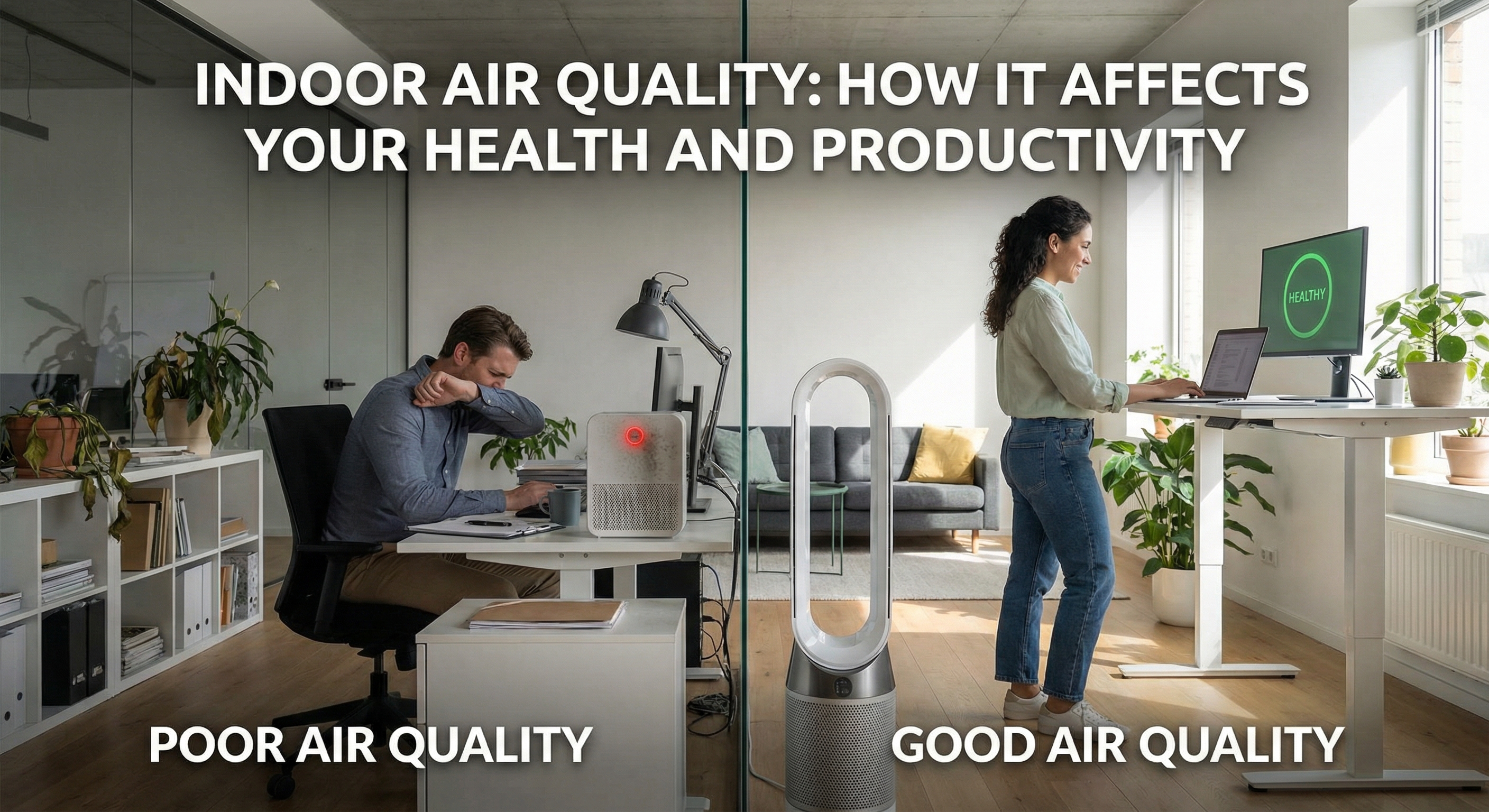
Air quality directly impacts your health, cognitive function, and productivity — the EPA estimates that Americans spend approximately 90 percent of their time indoors, where air pollutant concentrations can be 2 to 5 times higher than outdoor levels. For some pollutants, indoor concentrations may exceed outdoor levels by 100 times or more. Despite these alarming figures, most people rarely think about the quality of the air inside their homes and workplaces. The World Health Organization attributes 3.2 million deaths globally each year to household air pollution, making air quality one of the most significant and overlooked public health issues of our time.
Key Takeaway
Indoor air can be 2 to 5 times more polluted than outdoor air, according to the EPA, and Americans spend approximately 90% of their time indoors. Poor air quality is linked to headaches, fatigue, respiratory illness, and reduced cognitive function.
Whether you are at home, in an office, at school, or in a commercial building, the air you breathe affects everything from your respiratory health to your ability to think clearly and perform at your best. In the warm, humid Southeast — across North Carolina, South Carolina, and Georgia — high outdoor humidity compounds air quality challenges, making proper ventilation and moisture control especially important. Understanding what indoor air pollutants do to your body and mind is the first step toward creating healthier indoor environments for yourself, your family, and your coworkers.
How Does Poor Air Quality Affect Your Health?
The health effects of poor air quality range from mild discomfort to serious chronic disease. The EPA ranks indoor air pollution among the top five environmental risks to public health, and the CDC has identified air quality as a key factor in several major health conditions.
Short-term health effects of exposure to indoor air pollutants can appear within hours or days of exposure. These include headaches, dizziness, fatigue, irritation of the eyes, nose, and throat, coughing, sneezing, and difficulty concentrating. Many people experience these symptoms without realizing that their indoor air is the cause. A telltale sign is when symptoms improve after leaving the building and return when you come back — a pattern known as sick building syndrome.
Long-term health effects are more concerning and can develop after years of exposure. The EPA has linked prolonged exposure to indoor air pollutants with respiratory diseases such as asthma and chronic obstructive pulmonary disease (COPD), cardiovascular disease, and certain cancers. Radon, for example, is the second leading cause of lung cancer in the United States, responsible for an estimated 21,000 deaths annually according to the EPA. Formaldehyde, a common indoor VOC, has been classified as a known human carcinogen by the International Agency for Research on Cancer.
The CDC reports that approximately 25 million Americans have asthma, and airborne contaminants and pollutants are among the most common triggers for asthma attacks. Children with asthma are particularly affected — poor air quality in homes and schools can increase the frequency and severity of asthma episodes, leading to missed school days, emergency room visits, and long-term lung damage.
What Are the Most Common Indoor Air Pollutants?
Indoor air contains a complex mixture of pollutants from multiple sources. Understanding what is in your air is essential to addressing the problem. Here are the most common indoor air pollutants and where they come from:
- Volatile Organic Compounds (VOCs): These are chemical gases emitted by a wide range of everyday products including paints, varnishes, cleaning supplies, air fresheners, new furniture, carpeting, building materials, and personal care products. The EPA has found that levels of many organic pollutants are consistently 2 to 5 times higher indoors than outdoors. Common VOCs include formaldehyde, benzene, toluene, and xylene. Learn more in our detailed guide to VOC testing and volatile organic compounds.
- Mold spores: Mold grows wherever moisture is present — in bathrooms, basements, around leaky pipes, and behind walls. Airborne mold spores can trigger allergic reactions, asthma attacks, and respiratory infections. Some species, such as Stachybotrys (black mold), produce mycotoxins that can cause more serious health effects with prolonged exposure. Read about the signs you may need mold testing.
- Particulate matter (PM2.5 and PM10): Fine particles from cooking, smoking, candles, fireplaces, and outdoor air infiltration penetrate deep into the lungs and can enter the bloodstream. The EPA sets National Ambient Air Quality Standards for particulate matter, but indoor levels frequently exceed outdoor levels in homes with poor ventilation or indoor combustion sources.
- Carbon dioxide (CO2): While not toxic at typical indoor levels, elevated CO2 is a reliable indicator of inadequate ventilation. ASHRAE recommends keeping indoor CO2 below 1,000 ppm. Levels above this threshold cause drowsiness, headaches, and impaired cognitive function — effects that are particularly relevant in offices, classrooms, and conference rooms.
- Radon: A naturally occurring radioactive gas that seeps into buildings from the soil. The EPA estimates that nearly 1 in 15 homes in the United States has elevated radon levels. Radon is odorless and invisible, making testing the only way to detect it.
- Airborne Contaminants: Dust mites, pet dander, pollen, and other airborne particulates accumulate in indoor environments and trigger respiratory reactions and asthma in sensitive individuals.
- Carbon monoxide (CO): Produced by fuel-burning appliances such as furnaces, gas stoves, water heaters, and fireplaces. CO is odorless and can be fatal at high concentrations. Even low-level chronic exposure causes headaches, confusion, and cardiovascular stress.
How Does Air Quality Impact Workplace Productivity?
The connection between air quality and workplace performance has been the subject of extensive research in recent years, and the findings are striking. Poor air quality does not just make employees sick — it makes them less effective, less creative, and more likely to miss work.
A landmark 2015 study published in Environmental Health Perspectives by Harvard University's T.H. Chan School of Public Health, known as the COGfx Study, placed workers in controlled office environments with varying levels of ventilation and pollutants. The results were dramatic: workers in well-ventilated offices with low VOC levels and low CO2 concentrations scored 61 percent higher on cognitive function tests compared to workers in conventional office environments. The cognitive domains most affected included crisis response, information usage, and strategy — precisely the higher-order thinking skills that drive business performance.
A follow-up study by the same Harvard team, published in the journal Environmental Health Perspectives, found that for every 10-microgram-per-cubic-meter decrease in PM2.5, workers experienced measurable improvements in reaction time and cognitive function. The researchers estimated that the productivity benefits of improved air quality far outweigh the cost of better ventilation and filtration systems.
The financial impact is significant. Studies published in the Indoor Air journal estimate that poor air quality costs U.S. businesses tens of billions of dollars annually through reduced productivity, increased absenteeism, and higher healthcare costs. The American Society of Heating, Refrigerating, and Air-Conditioning Engineers (ASHRAE) has found that improving ventilation rates from the minimum code requirement to recommended levels can increase worker productivity by 8 to 11 percent.
For building owners and facility managers, professional air quality testing provides the data needed to identify problems and justify investments in ventilation improvements, air filtration, and source control measures.
Worried about air quality at home or work? Call (864) 619-2092 or schedule a free consultation today.
Who Is Most Vulnerable to Poor Air Quality?
While poor air quality affects everyone, certain populations are disproportionately impacted due to biological and physiological factors:
- Children: Children breathe more air relative to their body weight than adults, meaning they take in a proportionally larger dose of any pollutant present. Their lungs and immune systems are still developing, making them more susceptible to damage. The CDC notes that children spend a significant portion of their time in indoor environments — at home and at school — where air quality may be poor. Childhood exposure to indoor air pollutants has been linked to the development of asthma, allergies, and reduced lung function that can persist into adulthood.
- Elderly adults: Older adults often have pre-existing respiratory or cardiovascular conditions that are worsened by poor air quality. They also tend to spend more time indoors, increasing their cumulative exposure to indoor pollutants.
- Pregnant women: Exposure to certain indoor air pollutants during pregnancy has been associated with adverse birth outcomes including low birth weight, preterm birth, and developmental effects. Formaldehyde, particulate matter, and carbon monoxide are of particular concern during pregnancy.
- People with asthma or allergies: Airborne contaminants and irritants are among the most potent triggers for asthma attacks and allergic reactions. The Asthma and Allergy Foundation of America reports that airborne contaminants play a significant role in triggering asthma symptoms for the majority of people with the condition.
- Immunocompromised individuals: People with weakened immune systems are at increased risk from airborne mold spores, bacteria, and other biological contaminants that a healthy immune system might otherwise handle.
How Can You Improve Your Air Quality?
Improving air quality involves three fundamental strategies: source control, improved ventilation, and air cleaning. The most effective approach typically combines all three.
Source control is the most effective single strategy. Eliminate or reduce pollution sources by choosing low-VOC paints and cleaning products, maintaining HVAC systems to prevent mold growth, fixing water leaks promptly, avoiding indoor smoking, and using exhaust fans when cooking. Addressing moisture problems is particularly important, as moisture is the primary driver of mold growth and dust mite proliferation.
Ventilation improvements bring fresh outdoor air into the building and dilute indoor pollutants. Open windows when weather permits, use exhaust fans in kitchens and bathrooms, and ensure your HVAC system is properly maintained and providing adequate outdoor air exchange. In commercial buildings, ventilation rates should meet or exceed ASHRAE Standard 62.1 recommendations.
Air cleaning using HEPA filters, activated carbon filters, or whole-building air purification systems can reduce particulate matter, airborne contaminants, and some gaseous pollutants. However, air cleaners are most effective as a supplement to source control and ventilation — they cannot compensate for a building with major pollution sources or inadequate ventilation.
When Should You Get Professional Air Quality Testing?
While general improvements like better ventilation and source control are always beneficial, there are situations where professional testing is the smart next step. As we explain in our comprehensive guide to air quality testing, professional assessment provides the specific data you need to make targeted, effective improvements.
You should consider scheduling professional testing if any of the following situations apply:
- You or your family experience persistent health symptoms that improve when you leave the building
- You notice musty odors or visible mold
- Your home or building has experienced water damage or flooding
- You are in the middle of or have recently completed renovation projects
- You are moving into a new home or office
- You have vulnerable household members such as young children, elderly residents, or people with asthma
- Workplace productivity concerns suggest an air quality problem
Professional testing identifies the specific pollutants present, their concentrations, and their likely sources. This information allows you to prioritize your response and invest in the solutions that will have the greatest impact on your health and comfort. Without testing, you are essentially guessing at the problem and hoping your solutions address the right issues.
With over 25 years of hands-on experience in environmental testing and SCDES/AHERA certifications, the team at A1 Air Quality Consultants brings deep expertise to every air quality assessment — helping homeowners and businesses across North Carolina, South Carolina, and Georgia make informed decisions based on accurate, NAVLAB-verified data.
Need professional testing? Contact A1 Air Quality Consultants or call (864) 619-2092 for a free consultation.