
February 19, 2026 · By A1 Air Quality Consultants
Last updated: March 4, 2026
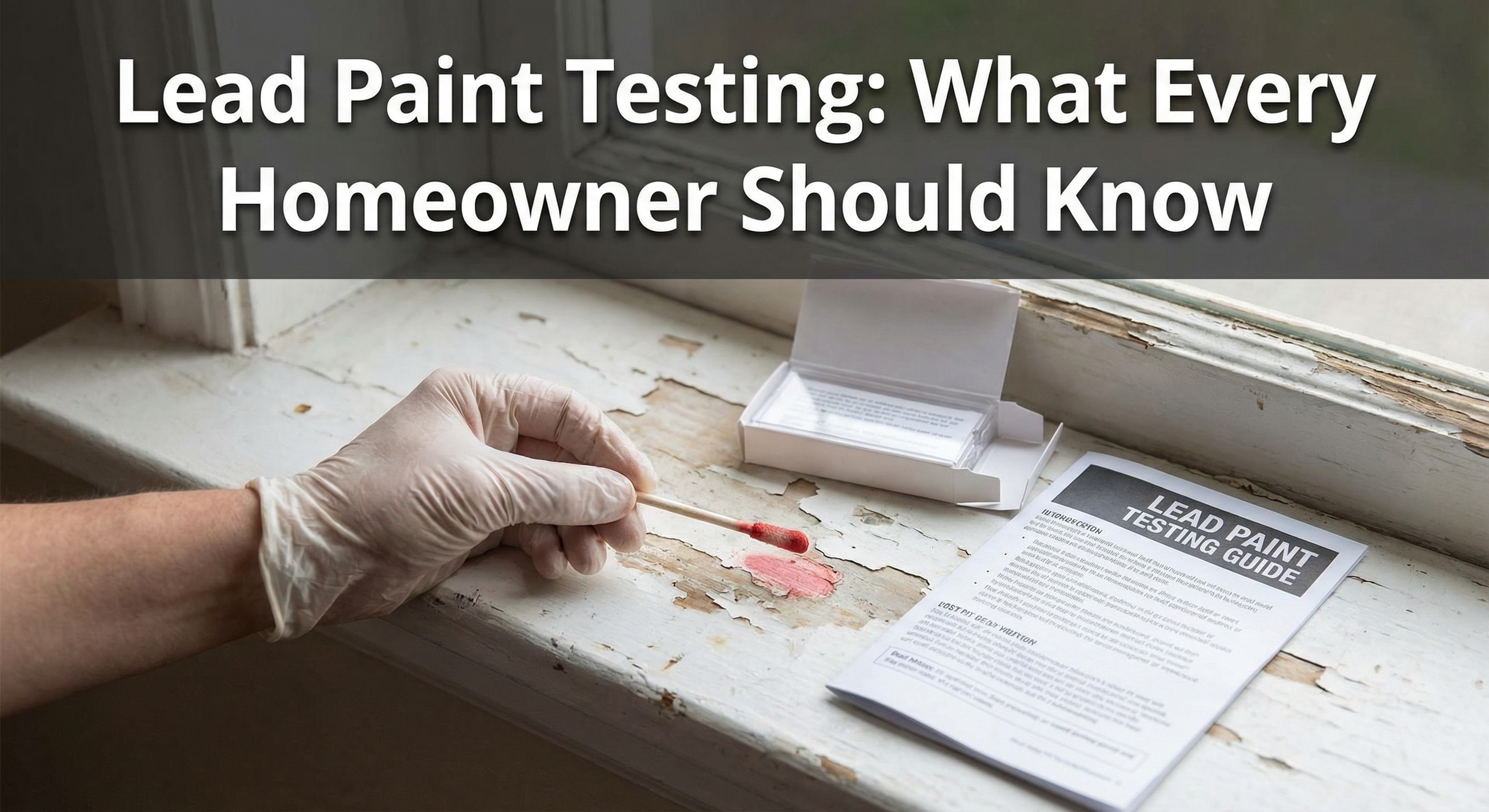
Lead paint testing is the only reliable way to determine whether your home contains lead-based paint, which was used extensively in homes built before 1978 and poses serious health risks to children, pregnant women, and adults. The Consumer Product Safety Commission banned lead-based paint for residential use in 1978, but the EPA estimates that approximately 87 percent of homes built before 1940 and 24 percent of homes built between 1960 and 1977 still contain some lead-based paint. Without professional testing, there is no way to tell whether paint contains lead simply by looking at it.
Key Takeaway
Lead paint testing is the only reliable way to determine if your pre-1978 home contains lead-based paint. Professional methods include XRF analysis, paint chip lab testing, and dust wipe sampling — each providing different insights into the extent and risk of lead contamination.
Lead exposure remains a critical public health concern in the United States. The CDC has stated that there is no safe level of lead in the blood, and even low levels of exposure can cause irreversible harm to developing children. According to the CDC, approximately half a million children in the U.S. ages one to five have blood lead levels above the reference value of 3.5 micrograms per deciliter. Deteriorating lead paint and the dust it generates are the most common sources of childhood lead exposure. Understanding your home's lead status through professional lead testing is the first step in protecting your family.
Why Does Lead Paint Testing Matter?
Lead is a potent neurotoxin that affects virtually every system in the body. In children, lead exposure can cause developmental delays, learning difficulties, reduced IQ, behavioral problems, hearing loss, and in severe cases, seizures and death. The CDC emphasizes that the effects of lead poisoning on a child's developing brain are irreversible. Adults exposed to lead may experience high blood pressure, kidney damage, reproductive problems, and nerve disorders.
The primary pathway for lead exposure in homes is through lead-contaminated dust generated by deteriorating lead paint. Friction surfaces such as windows and doors are particularly problematic because the regular opening and closing motion grinds painted surfaces together, releasing fine lead particles into the air and onto surrounding surfaces. Young children are at the greatest risk because they frequently put their hands and objects in their mouths, ingesting lead dust that has settled on floors, windowsills, and toys.
Even if your lead paint appears intact today, it will eventually deteriorate with age, moisture, and wear. Renovation and remodeling projects can also disturb previously stable lead paint, releasing dangerous amounts of lead dust throughout your home. Testing gives you the information you need to manage or eliminate the risk before anyone is harmed.
Who Needs Lead Paint Testing?
If your home was built before 1978, lead paint testing is strongly recommended in several situations. The likelihood of lead paint being present increases with the age of the home. Here are the most common scenarios where testing is essential:
- Buying or selling a pre-1978 home: Federal law requires sellers and landlords to disclose known lead-based paint hazards and provide buyers with an EPA pamphlet about lead. Buyers have the right to request a lead inspection before purchase. Testing protects both parties by establishing a clear record of the property's lead status.
- Before renovation or remodeling: The EPA's Renovation, Repair, and Painting (RRP) Rule requires that renovations disturbing more than six square feet of potentially lead-painted surface in pre-1978 homes be performed by EPA-certified renovators using lead-safe work practices. Testing determines whether lead is present so appropriate precautions can be taken. See our home inspection checklist for a complete pre-renovation testing plan.
- Children or pregnant women in the home: Homes with young children or pregnant women should be tested as a precautionary measure, especially if paint is chipping, peeling, or chalking on any surface.
- Visible paint deterioration: Cracking, peeling, chipping, or chalking paint in a pre-1978 home warrants immediate testing, as deteriorating lead paint is the primary source of lead dust.
- Rental properties: Landlords have legal obligations to maintain pre-1978 rental properties free of lead hazards and must comply with EPA and HUD disclosure requirements.
What Are the Different Lead Paint Testing Methods?
Professional lead paint testing involves several methods, each suited to different situations. A certified lead inspector will select the appropriate method based on your needs, the age and condition of the property, and the purpose of the testing.
XRF (X-Ray Fluorescence) Analysis: XRF is the most common and efficient method for whole-house lead inspections. A handheld XRF analyzer emits X-rays that cause lead atoms in paint to fluoresce, allowing the instrument to measure lead concentration in milligrams per square centimeter. The test is non-destructive, meaning no paint samples need to be removed, and results are available instantly. XRF can detect lead through multiple layers of paint, making it ideal for surfaces that have been repainted over the years. A certified inspector can test dozens or even hundreds of surfaces in a single visit.
Paint Chip Laboratory Analysis: This method involves collecting small paint chip samples from surfaces of concern and sending them to an accredited laboratory for analysis. The laboratory uses methods such as atomic absorption spectroscopy (AAS) or inductively coupled plasma (ICP) analysis to determine the lead content. Paint chip analysis provides highly accurate results and is often used to confirm XRF findings or when XRF testing is not available. The EPA defines lead-based paint as paint containing 1.0 milligrams per square centimeter or greater by XRF, or 0.5 percent by weight or 5,000 parts per million through laboratory analysis.
Dust Wipe Testing: Dust wipe samples are collected from floors, windowsills, and window troughs to measure the amount of lead-contaminated dust present. This method is particularly important for assessing actual exposure risk, as lead dust is the primary pathway for lead ingestion. The EPA has set clearance standards for lead in dust: 10 micrograms per square foot for floors and 100 micrograms per square foot for windowsills. Dust wipe testing is commonly used after lead abatement work to verify that a property has been properly cleaned.
Water Testing: In some cases, lead testing may also include water testing, particularly in older homes where lead solder was used in plumbing or where lead service lines connect the home to the municipal water supply. Water samples are collected and analyzed for lead concentration. The EPA's action level for lead in drinking water is 15 parts per billion. Testing your water is an important complement to paint testing for a complete picture of potential lead exposure sources.
Need lead paint testing for your home? Call (864) 619-2092 or schedule a free consultation today.
What Are the Federal and State Regulations for Lead Paint?
Several federal laws and regulations govern lead paint in residential properties. Understanding these regulations helps homeowners, buyers, and landlords meet their legal obligations and protect occupants from lead exposure.
The Residential Lead-Based Paint Hazard Reduction Act of 1992 (Title X) is the primary federal law addressing lead paint hazards. It requires disclosure of known lead-based paint and lead-based paint hazards in housing built before 1978 prior to sale or lease. Sellers and landlords must provide the EPA pamphlet "Protect Your Family From Lead in Your Home" and allow buyers a 10-day period to conduct a lead inspection.
The EPA RRP Rule (40 CFR 745) requires that firms performing renovation, repair, and painting projects that disturb lead-based paint in pre-1978 homes, child care facilities, and schools be EPA-certified and use lead-safe work practices. Violations can result in fines of up to $37,500 per day per violation.
In South Carolina, the Department of Environmental Services (SCDES) administers the state's lead programs, including licensing requirements for lead inspectors, risk assessors, and abatement contractors. SCDES also maintains a database of properties with identified lead hazards and provides resources for families affected by lead exposure. Working with an SCDES-licensed testing professional ensures that your inspection meets all state requirements and that your results will be recognized by regulatory agencies.
What Happens if Lead Paint Is Found in Your Home?
Discovering lead paint in your home does not necessarily mean you need to panic or immediately undertake expensive abatement. The appropriate response depends on the condition and location of the lead paint, the presence of vulnerable occupants, and any planned renovation activities.
If lead paint is intact and in good condition on surfaces that are not subject to friction, impact, or chewing by children, it may be safely managed in place. This involves regular monitoring of paint condition, prompt repair of any deterioration, careful cleaning to control dust, and informing future contractors about the presence of lead paint before any work is performed.
If lead paint is deteriorating or on friction surfaces, more active measures are needed. Options include encapsulation, which involves applying a special coating over the lead paint to seal it in place, or abatement, which involves the permanent removal of lead paint by a certified abatement contractor. The choice between these approaches depends on the specific situation, and an independent testing company can help you understand your options without any financial incentive to recommend one approach over another.
For families with children who have elevated blood lead levels, SCDES and local health departments can provide case management services and conduct environmental investigations to identify and eliminate lead sources in the home. The indoor air quality testing can also help assess whether airborne lead dust is present.
How Do You Choose a Lead Testing Company?
Selecting the right lead testing company is critical to getting accurate, trustworthy results. As we discuss in our article on why independent testing matters, companies that offer both testing and remediation services have a financial incentive to find problems. Here are key factors to consider:
- Certification and licensing: Ensure the inspector is EPA-certified and licensed by your state's regulatory agency (SCDES in South Carolina). Ask for proof of certification before scheduling an inspection.
- Independence: Choose a company that provides testing only and does not sell remediation or abatement services. This eliminates any conflict of interest and ensures your results are objective.
- Experience and equipment: Ask about the testing methods used, the type of XRF analyzer employed, and the laboratory that will analyze any samples. Experienced inspectors using current-generation equipment provide the most reliable results.
- Detailed reporting: A good testing company provides a comprehensive report that identifies every surface tested, the lead concentration found, the condition of each painted surface, and clear recommendations for next steps.
- Transparent pricing: Reputable companies provide clear, upfront pricing without hidden fees. Ask for a written estimate before scheduling your inspection.
As noted in our guide to lead paint dangers in pre-1978 homes, understanding the risks and having reliable test results empowers you to make informed decisions about protecting your family and your investment.
Need professional testing? Contact A1 Air Quality Consultants or call (864) 619-2092 for a free consultation.