
November 5, 2025 · By A1 Air Quality Consultants
Last updated: March 4, 2026
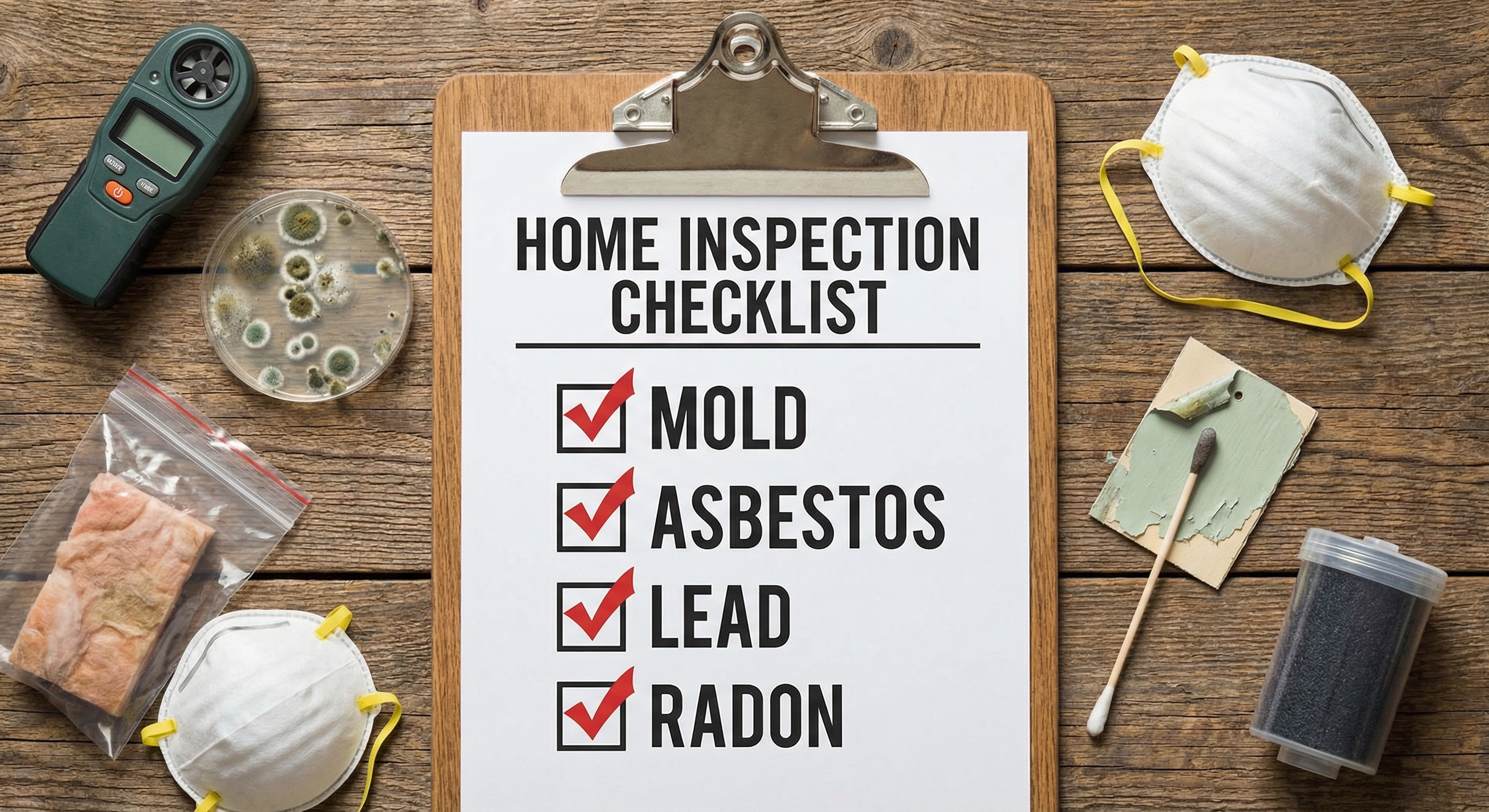
A comprehensive home inspection should include testing for asbestos, lead, mold, and radon — the four most common indoor air quality hazards found in residential properties. According to the EPA, indoor air can be two to five times more polluted than outdoor air, and these four contaminants are responsible for thousands of illnesses and deaths each year. Whether you are buying a home, planning renovations, or simply want to ensure your family's safety, this five-step checklist will guide you through what to look for, when to test, and when to call in a professional.
Key Takeaway
A thorough home inspection for air quality hazards should include testing for mold, asbestos, lead paint, and radon — the four most common indoor environmental risks. Professional testing before buying or renovating a home can reveal hidden hazards that visual inspections miss.
Most standard home inspections do not cover specialized air quality testing. A general inspector may note visible water damage or outdated materials, but they typically lack the equipment and certifications to test for airborne mold spores, asbestos fibers, lead dust, or radon gas. That is why a dedicated air quality inspection is an essential complement to any home evaluation.
Step 1: How Do You Inspect for Signs of Mold?
Mold is one of the most common indoor air quality problems, affecting an estimated 70% of homes to some degree according to environmental studies. Mold thrives in damp, humid environments and can grow behind walls, under floors, and in HVAC systems where it may not be immediately visible.
What to look for:
- Visible mold growth on walls, ceilings, or around windows — it may appear as black, green, white, or brown spots
- Musty or earthy odors, especially in basements, bathrooms, and crawl spaces
- Water stains or discoloration on ceilings and walls
- Peeling or bubbling paint or wallpaper
- Condensation on windows or pipes
- Past or current water damage from leaks, flooding, or plumbing issues
The CDC warns that mold exposure can cause nasal stuffiness, throat irritation, coughing, eye irritation, and skin irritation. People with mold allergies, asthma, or compromised immune systems may experience more severe reactions. If you notice any of these signs, professional mold testing can identify the specific species present and measure airborne spore concentrations to determine the severity of the problem.
Step 2: How Do You Check for Asbestos-Containing Materials?
Asbestos was widely used in construction materials from the 1930s through the late 1970s for its fire resistance and durability. The EPA estimates that asbestos is present in approximately 30 million homes and buildings across the United States. When asbestos-containing materials are disturbed — through renovation, deterioration, or damage — microscopic fibers become airborne and can cause serious lung diseases including mesothelioma and asbestosis.
Common asbestos-containing materials include:
- Popcorn or textured ceilings installed before 1980
- Floor tiles, particularly 9x9-inch vinyl tiles, and their adhesive
- Pipe and duct insulation wrapping
- Vermiculite attic insulation (often sold as Zonolite)
- Cement siding and roofing shingles
- Textured wall and ceiling coatings
- Boiler and furnace insulation
Important: You cannot identify asbestos by sight alone. If your home was built before 1980 and you are planning any renovation or demolition work, professional asbestos testing is essential. Never scrape, sand, drill, or cut suspected asbestos materials, as this can release dangerous fibers into the air. Learn more about what asbestos is and where it hides in buildings, or see our guide on whether you need asbestos testing before renovation.
Step 3: How Do You Test for Lead Paint in Your Home?
Lead-based paint was banned for residential use in 1978, but the CDC estimates that approximately 29 million housing units in the United States still contain lead-based paint hazards. Lead is particularly dangerous for children under six years old, as even low levels of lead exposure can cause developmental delays, learning difficulties, and behavioral problems.
What to look for:
- Chipping, peeling, or deteriorating paint in homes built before 1978
- Paint on friction surfaces such as windows, doors, and stair railings that create lead dust when opened or used
- Bare soil around the exterior of older homes, which may be contaminated with lead from deteriorating exterior paint
- Previous paint-over jobs that may be covering lead-based paint underneath
According to the EPA, lead dust from deteriorating paint is the most common source of lead exposure in children. Professional lead testing can analyze paint chips, dust wipe samples, and soil to determine whether lead hazards exist. This is especially important if young children or pregnant women live in or will occupy the home. For a detailed guide to lead testing methods, see Lead Paint Testing: What Every Homeowner Should Know. For a deeper look at the risks, read our article on lead paint dangers in pre-1978 homes.
Buying or renovating a home? Get a complete air quality inspection. Call (864) 619-2092 or schedule a free consultation today.
Step 4: How Do You Test for Radon Gas?
Radon is a naturally occurring radioactive gas that seeps into homes through cracks in foundations, gaps around pipes, and other openings in contact with the ground. The EPA identifies radon as the second leading cause of lung cancer in the United States, responsible for an estimated 21,000 deaths per year. Because radon is invisible, odorless, and tasteless, the only way to know if it is present is to test.
Key facts about radon testing:
- The EPA recommends testing all homes below the third floor, regardless of location or age
- Radon levels of 4 pCi/L (picocuries per liter) or higher require mitigation
- The EPA also recommends considering mitigation for levels between 2 and 4 pCi/L
- Testing should be performed in the lowest livable area of the home
- Short-term tests run for 2 to 7 days, while long-term tests run for 90 days or more for a more accurate annual average
- Radon levels can vary significantly from home to home, even in the same neighborhood
Professional radon testing uses calibrated continuous radon monitors that provide hour-by-hour readings and tamper-detection features, which is especially important during real estate transactions. Two neighboring homes can have vastly different radon levels, so every home should be tested individually.
Step 5: Why Should You Get Professional Air Quality Testing?
While understanding what to look for is valuable, professional air quality testing provides the accuracy, comprehensiveness, and legal documentation that DIY methods simply cannot match. A certified testing professional brings several important advantages to your home inspection.
Benefits of professional testing:
- Calibrated equipment: Professional-grade instruments provide more accurate and reliable readings than consumer-level test kits
- Accredited laboratory analysis: Samples are analyzed by certified labs following strict chain-of-custody protocols
- Standardized protocols: Certified professionals follow EPA, OSHA, and industry-standard testing methods
- Comprehensive reporting: Detailed reports document findings, health implications, and recommended next steps
- Independence: An independent testing company with no ties to remediation contractors provides unbiased results you can trust
This last point is critical. When the same company that tests your home also offers remediation services, there is an inherent conflict of interest. Independent testing companies like A1 Air Quality Consultants, with over 25 years of experience in environmental testing, never perform remediation work, so our results and recommendations are always objective and honest.
How Should You Prioritize Your Home Inspection Testing?
Not every home requires all four types of testing. Here is how to prioritize based on your situation:
- Buying a home: Test for all four hazards — asbestos, lead, mold, and radon. This is your best opportunity to identify problems before they become your responsibility.
- Planning renovations: Test for asbestos and lead before disturbing any building materials in homes built before 1980.
- Health concerns: If occupants are experiencing unexplained respiratory symptoms, allergies, or headaches, start with mold and indoor air quality testing.
- After water damage: Mold testing should be conducted 24 to 48 hours after any significant water event.
- Routine safety: Radon testing should be performed every two years, or after major structural changes to your home.
For more information about specific warning signs, read our guide on signs you may need mold testing.
What Are the Health Risks of Ignoring These Hazards?
The health consequences of untested indoor air quality hazards can be severe and long-lasting. The EPA estimates that Americans spend approximately 90% of their time indoors, making indoor air quality a critical health factor. Mold exposure can trigger chronic respiratory infections and worsen asthma. Asbestos fibers, once inhaled, can remain in the lungs for decades before causing mesothelioma or lung cancer. Lead exposure in children can result in permanent cognitive impairment. Radon-induced lung cancer claims thousands of lives annually, yet it is entirely preventable with proper testing and mitigation.
The good news is that all four of these hazards are well understood, testable, and manageable. Early detection through a thorough home inspection allows you to address problems before they affect your family's health or your home's value.
Need professional testing? Contact A1 Air Quality Consultants or call (864) 619-2092 for a free consultation.