
March 4, 2026 · By A1 Air Quality Consultants
Last updated: March 4, 2026
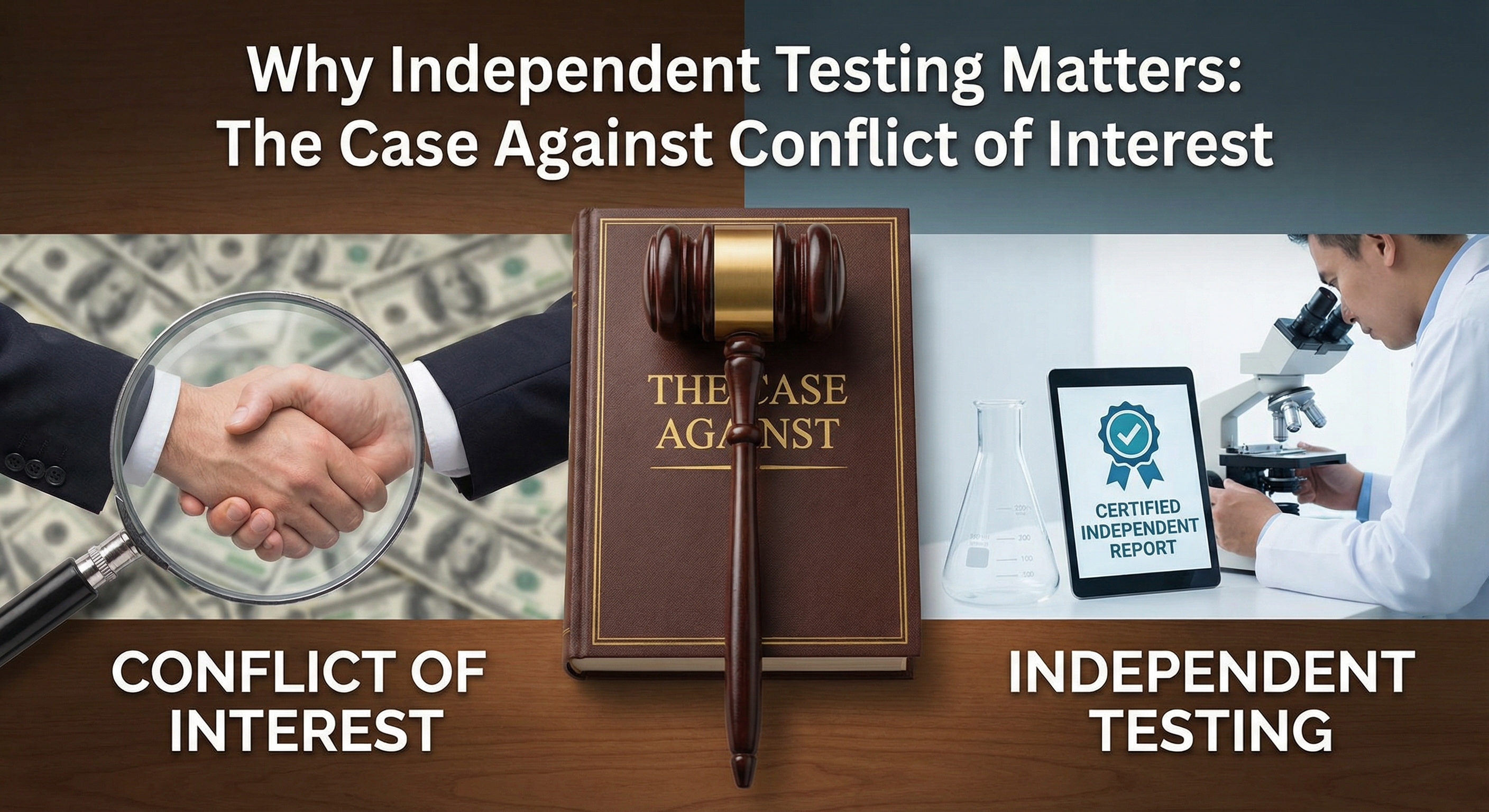
When the same company that tests your air quality also sells remediation services, there is an inherent conflict of interest that can lead to exaggerated findings, unnecessary work, and inflated costs. Independent, testing-only companies like A1 Air Quality Consultants have no financial incentive to recommend work you do not need. This distinction matters more than most homeowners realize, and it can mean the difference between a fair, honest assessment and a sales pitch disguised as a professional inspection.
Key Takeaway
When the same company tests for hazards and also performs remediation, a conflict of interest can lead to exaggerated findings and inflated repair costs. Independent testing companies like A1 Air Quality Consultants provide unbiased results because they have no financial incentive tied to remediation outcomes.
The air quality testing industry operates with minimal regulation around conflicts of interest. Unlike the real estate appraisal industry, where independent appraisals are legally required to protect buyers, there is no federal requirement that environmental testing be performed by a company independent of the remediation process. This means that many companies offering asbestos testing, lead testing, mold testing, and indoor air quality assessments also profit from the remediation work that follows a positive finding. According to the EPA, the indoor air quality testing and remediation industry generates billions of dollars annually in the United States, creating powerful financial incentives that do not always align with the consumer's best interests. Understanding this dynamic is essential to protecting yourself as a consumer.
What Does Conflict of Interest Look Like in the Testing Industry?
The conflict of interest in environmental testing takes several forms, some obvious and some subtle. Recognizing these patterns can help you avoid companies that prioritize their own revenue over your best interests.
The free or discounted inspection: Some remediation companies offer free or heavily discounted inspections as a way to get into your home. The testing is not the product — it is the marketing tool. The real revenue comes from the remediation work they will recommend after the inspection. The Federal Trade Commission has warned consumers about unfair practices in home inspection industries where the same company benefits from both finding and fixing problems. When the test is free, the company needs to find a problem to recoup their investment and generate profit.
Alarmist language and pressure tactics: Companies with a financial stake in remediation may present findings in the most alarming terms possible. Normal mold spore counts that are consistent with outdoor levels might be described as "dangerous" or "toxic." Trace amounts of a substance might be characterized as requiring immediate, expensive action. The goal is to create urgency and fear that motivates you to sign a remediation contract on the spot, before you have time to get a second opinion.
Inflated scope of work: When the same company tests and remediates, there is a natural tendency to recommend a broader scope of work than what is actually necessary. Studies show that remediation cost estimates from companies that also perform testing can be 30 to 50 percent higher than estimates from independent assessors. A mold problem limited to a single bathroom might be described as requiring whole-house remediation. An asbestos finding in one room might lead to a recommendation to abate the entire building. Without an independent assessment, you have no way to verify whether the recommended scope is appropriate.
Selective testing protocols: A company that profits from remediation may choose testing methods, sample locations, or laboratory analysis techniques that are more likely to produce positive results. They might collect more samples than necessary from areas likely to show elevated levels while avoiding areas that would bring the overall picture into better context. For a deeper look at what comprehensive testing involves, see our guide to indoor air quality testing.
How Does Independent Testing Protect Consumers?
Independent testing companies operate on a fundamentally different business model. Their revenue comes exclusively from the testing service itself, not from follow-up remediation work. This creates a set of incentives that are naturally aligned with the consumer's interests.
Objective results: An independent testing company has no reason to exaggerate findings. Whether your results come back clean or show a problem, the testing company earns the same fee. This objectivity means you can trust that a positive finding is genuine and that a clean result is not being concealed to avoid losing a remediation sale.
Honest recommendations: When an independent company recommends action, you can be confident that the recommendation is based on the data alone. If your test results show that no remediation is needed, an independent company will tell you so. A company that sells remediation would lose a potential sale by delivering the same honest message. According to the CDC, indoor air quality problems affect approximately 25 million Americans with asthma and millions more with allergies — these individuals deserve honest assessments, not sales-driven diagnoses.
Accurate scope assessment: Independent test results give you an unbiased picture of the extent and severity of any problem found. This prevents you from paying for unnecessary work and ensures that any remediation you do pursue is appropriately scoped. For example, if mold testing reveals elevated spore counts in one room, an independent report will clearly identify the affected area without inflating the scope to generate a larger remediation contract.
Competitive bidding leverage: With independent test results in hand, you can solicit bids from multiple remediation contractors. Each contractor can review the same objective data and provide a quote based on the actual scope of work needed. This competition drives prices down and ensures you get fair value. When a remediation company provides both the test and the quote, you have no independent basis for comparison.
What Should You Look for in a Testing Company?
Choosing the right testing company is one of the most important decisions you will make in the process of evaluating your home or building's environmental health. Here are the key criteria to evaluate:
- Testing only — no remediation: This is the single most important factor. Confirm that the company does not offer, perform, or subcontract any remediation, removal, or abatement services. A company that does testing only has zero financial incentive to find problems that do not exist.
- Proper licensing and certification: In South Carolina, environmental testing professionals should be licensed through SCDES. Verify the company's credentials and ask for proof of licensing. For specific services like asbestos testing, indoor air quality testing, and lead testing, ensure the inspectors hold the appropriate certifications.
- Accredited laboratory partnerships: The testing company should send all samples to an independently accredited laboratory for analysis. Ask which laboratory they use and verify that it holds appropriate accreditations such as AIHA-LAP, LLC (formerly AIHA-LAT) for environmental microbiology or NVLAP accreditation for asbestos analysis.
- Transparent pricing: A reputable testing company provides clear, upfront pricing before the inspection. Be wary of companies that offer vague pricing or seem more interested in getting into your home than in explaining their fees.
- Detailed, understandable reports: Your test report should clearly present the findings, explain what the results mean in plain language, compare results to established health guidelines, and provide specific, actionable recommendations. The report should be useful to you whether or not you decide to pursue remediation.
Want unbiased air quality results? Choose independent testing. Call (864) 619-2092 or schedule a free consultation today.
What Questions Should You Ask Before Hiring a Testing Company?
Before hiring any environmental testing company, ask these questions to evaluate their independence and credibility:
- Do you offer remediation or removal services? If yes, move on. If they say no but are affiliated with or regularly refer to a specific remediation company, that is also a red flag.
- What laboratory do you use, and is it independently accredited? The answer should be a specific, named laboratory with verifiable accreditation. If the company analyzes samples in-house, ask whether the in-house lab is independently accredited.
- What certifications and licenses do your inspectors hold? Inspectors should be licensed by the state regulatory agency and hold certifications relevant to the type of testing being performed.
- Can you provide a sample report? Reviewing a sample report lets you evaluate the quality and detail of the company's work before committing. A thorough report is a sign of a thorough inspection.
- What is included in your fee, and are there any additional costs? Get a clear written estimate that specifies the number of samples, the testing methods, and the laboratory analysis fees included in the price.
How Does A1 Air Quality Consultants' Independent Model Work?
A1 Air Quality Consultants was built from the ground up as a testing-only company. We made the deliberate decision to never offer remediation, removal, or abatement services because we believe that independence is the foundation of trust. Here is how our model works:
We test. We report. That is it. With over 25 years of experience and SCDES/AHERA certifications, A1 Air Quality Consultants delivers independent, science-based results you can trust. We serve homeowners and businesses across North Carolina, South Carolina, and Georgia. When you hire us, you get an experienced, SCDES-licensed inspector who conducts a thorough assessment using calibrated professional equipment. All samples are sent to independently accredited laboratories for analysis. When the results come back, we prepare a comprehensive report that explains exactly what was found, what it means, and what we recommend.
If your results are clean, we tell you so and you can have peace of mind. If a problem is identified, we explain the findings clearly and provide recommendations for next steps, but we never pressure you to hire anyone or take any specific action. You own your results, and you can use them however you choose — to get competitive remediation bids, to inform your real estate transaction, or simply to understand the environment in your home or building.
This model also means that our recommendations carry weight with third parties. When a remediation company provides the test results and the remediation quote, the results can be questioned. When an independent, licensed testing company provides the results, they carry the credibility of objectivity. Home inspectors, real estate agents, attorneys, and insurance companies recognize the value of independent testing for this reason.
Our inspectors handle a full range of environmental assessments including air quality testing, asbestos testing, commercial testing, lead testing, mold testing, and radon testing. In every case, the principle is the same: accurate data, honest interpretation, and zero conflict of interest. To learn more about the specific signs that warrant testing, read our articles on signs you may need mold testing and whether you need asbestos testing before renovation.
Need professional testing? Contact A1 Air Quality Consultants or call (864) 619-2092 for a free consultation.