
February 5, 2026 · By A1 Air Quality Consultants
Last updated: March 4, 2026
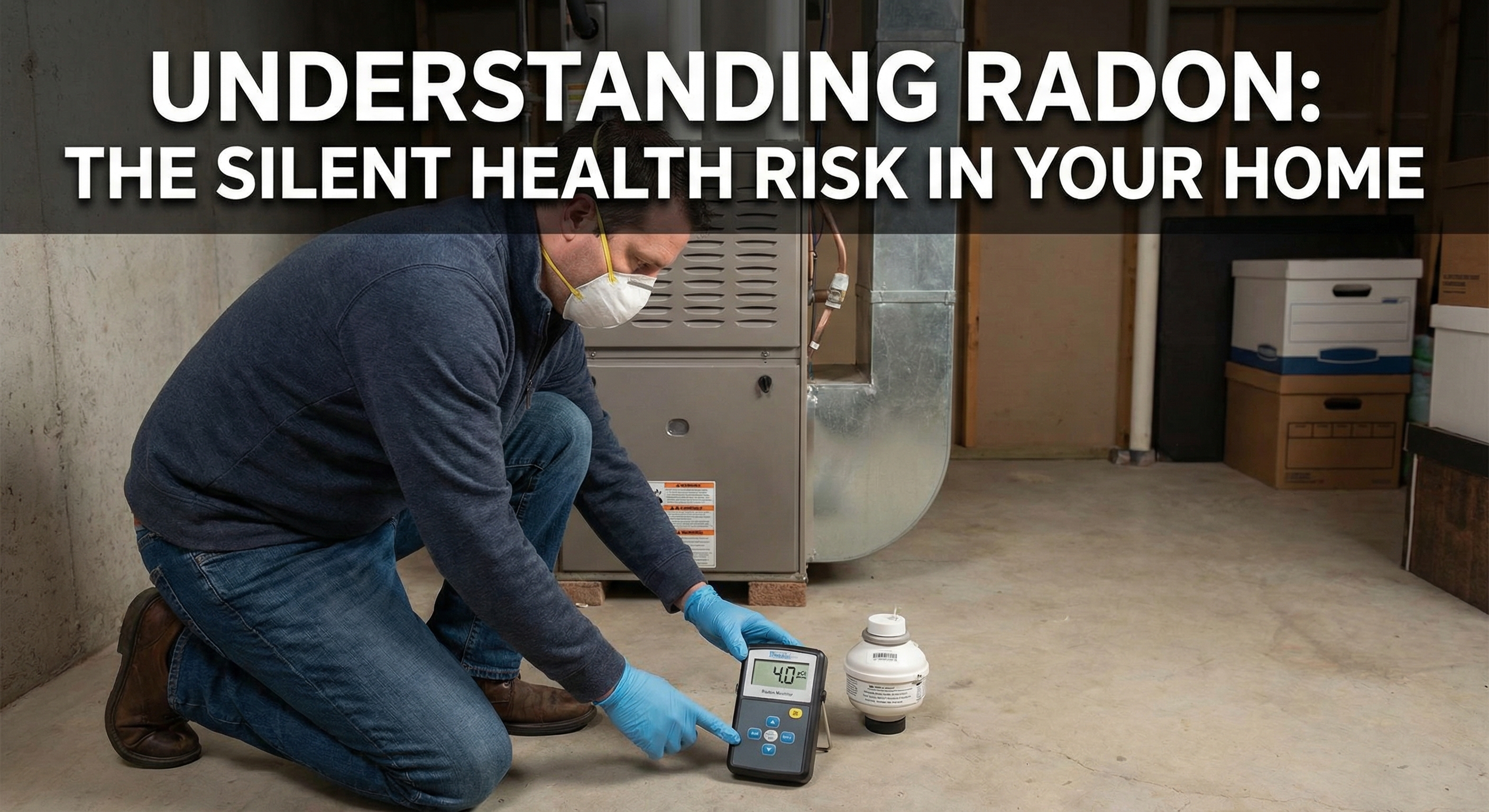
Radon is a colorless, odorless radioactive gas that naturally seeps into homes through cracks in foundations, and is the second leading cause of lung cancer in the United States, responsible for approximately 21,000 deaths annually according to the EPA. Because radon cannot be seen, smelled, or tasted, the only way to know if your home has elevated levels is through testing. Every home has some radon, but when the gas accumulates indoors to concentrations above the EPA action level of 4 picocuries per liter (pCi/L), the long-term health risk becomes significant and mitigation is recommended.
Key Takeaway
Radon is a naturally occurring radioactive gas that seeps into homes through cracks in foundations and is the second leading cause of lung cancer in the United States. The EPA recommends all homes be tested and that mitigation be pursued for levels at or above 4 pCi/L.
Despite the severity of the health risk, the EPA estimates that nearly one in 15 homes in the United States has radon levels at or above the action level. In some regions, including parts of North Carolina, South Carolina, and Georgia, the prevalence is even higher due to local geology. The good news is that radon testing is straightforward, relatively inexpensive, and mitigation systems are highly effective at reducing levels to safe ranges. Understanding what radon is and how it affects your health is the first step toward protecting your family.
What Is Radon and How Does It Form?
Radon is a naturally occurring radioactive gas with the atomic number 86 on the periodic table. It is produced through the radioactive decay chain of uranium-238, an element found in varying concentrations in soil and rock formations worldwide. When uranium decays, it produces a series of intermediate elements including radium-226, which then decays into radon-222, the isotope of primary concern for indoor air quality.
Radon-222 has a half-life of approximately 3.8 days, meaning half of any given quantity of radon will decay within that timeframe. As radon decays, it produces a series of short-lived radioactive particles called radon progeny or radon daughters, including polonium-218 and polonium-214. These solid radioactive particles attach to dust and aerosol particles in the air and, when inhaled, lodge in the lining of the lungs where they continue to emit radiation. It is this radiation, delivered directly to lung tissue, that causes the cellular damage leading to lung cancer.
How Does Radon Enter Your Home?
Radon gas migrates upward through soil and enters buildings through any pathway that connects the indoor space to the ground. Because indoor air pressure is typically lower than the pressure in the soil surrounding and beneath the foundation, a slight vacuum effect draws soil gases, including radon, into the building. This pressure differential is the primary driving force behind radon entry. If you are buying a home, radon testing should be part of your pre-purchase inspection checklist.
The most common entry points for radon include:
- Cracks in concrete slab foundations: Even hairline cracks in poured concrete or block foundations provide sufficient pathways for radon gas to enter.
- Gaps around service pipes and wiring: Openings where plumbing, electrical conduit, and other utilities penetrate the foundation are common entry points.
- Construction joints: The joint between the foundation wall and the floor slab (the cove joint) is a major radon entry point in many homes.
- Sump pits and floor drains: Open or unsealed sump pits provide a direct pathway from the soil into the living space. Floor drains connected to the subslab soil can also allow radon entry.
- Crawl spaces: Homes with dirt-floor crawl spaces have direct soil contact with the indoor environment, allowing radon to enter freely unless a vapor barrier and ventilation system are installed.
- Well water: In some cases, radon dissolved in groundwater can be released into indoor air when water is used for showering, washing, and other household activities. This is primarily a concern for homes with private wells.
- Building materials: Certain stone, brick, and concrete materials can contain elevated levels of radium and emit radon, though this is typically a minor source compared to soil gas entry.
What Are the Health Effects of Radon Exposure?
The primary health risk from radon exposure is lung cancer. When radon and its decay products are inhaled, the radioactive particles lodge in the bronchial epithelium, the tissue lining the airways, and deliver concentrated doses of alpha radiation to nearby cells. This radiation damages DNA and can initiate the uncontrolled cell growth that leads to cancer.
The EPA estimates that radon causes approximately 21,000 lung cancer deaths per year in the United States, making it the second leading cause of lung cancer after cigarette smoking. The risk is dose-dependent: the higher the radon concentration and the longer the exposure, the greater the risk. According to the EPA, living in a home with radon levels of 4 pCi/L poses a lung cancer risk comparable to smoking half a pack of cigarettes per day.
Smokers exposed to elevated radon levels face a dramatically compounded risk. The CDC reports that the combined effect of smoking and radon exposure is synergistic, not merely additive. A smoker living in a home with radon at 4 pCi/L has approximately five times the lung cancer risk of a non-smoker at the same radon level. This is why radon testing is especially critical in households where anyone smokes or has a history of smoking.
Unlike many environmental health risks, radon exposure produces no immediate symptoms. There is no cough, no irritation, no allergic reaction. The damage accumulates silently over years and decades, and lung cancer from radon exposure is often not diagnosed until it has reached an advanced stage. This is why radon is called a silent killer, and why proactive testing is the only form of prevention.
Want to know your home's radon level? Call (864) 619-2092 or schedule a free consultation today.
What Is the EPA Action Level for Radon?
The EPA has established an action level of 4 picocuries per liter (4 pCi/L) for indoor radon. If a home tests at or above this level, the EPA recommends that the homeowner take action to reduce radon, typically through the installation of a mitigation system. However, the EPA is clear that there is no known safe level of radon exposure and recommends that homeowners consider mitigation even when levels fall between 2 and 4 pCi/L.
To put these numbers in context, the average indoor radon level in the United States is approximately 1.3 pCi/L, and the average outdoor level is about 0.4 pCi/L. The World Health Organization (WHO) recommends a reference level of 2.7 pCi/L (100 Bq/m3), which is lower than the EPA action level, reflecting the organization's position that radon risk is significant even at relatively low concentrations.
It is important to understand that the EPA action level is not a safety threshold. It is a practical guideline that balances health risk against the cost and feasibility of mitigation. Any radon exposure carries some degree of risk, and reducing levels as far below the action level as possible provides additional health protection.
Who Is Most at Risk from Radon Exposure?
While everyone is susceptible to the health effects of radon, certain groups face elevated risk. Current and former smokers are at the highest risk because the carcinogenic effects of radon and tobacco smoke are synergistic. The EPA estimates that among 1,000 people exposed to radon at 4 pCi/L over a lifetime, approximately 62 smokers would develop lung cancer compared to approximately 7 non-smokers.
Children may also be more vulnerable to radon exposure due to their higher respiratory rates, smaller lung volumes, and developing tissues. People who spend more time at home, including remote workers, stay-at-home parents, retirees, and individuals with limited mobility, accumulate greater cumulative exposure. Residents of lower levels of the home, particularly basements and ground-floor rooms, are typically exposed to higher radon concentrations than those on upper floors.
Geographic location also affects risk. Homes in areas with granite bedrock, shale formations, or soils with elevated uranium content tend to have higher radon levels. Parts of the Upstate region of South Carolina, the mountain and piedmont regions of North Carolina, and northern Georgia have geological conditions that produce elevated radon. For regional data, see our article on radon levels in North Carolina, South Carolina, and Georgia.
How Is Radon Testing Performed?
Radon testing measures the concentration of radon gas in indoor air over a specific time period. There are two general categories of radon tests: short-term and long-term.
Short-term testing is the most common initial screening method. Short-term tests measure radon levels over a period of 2 to 90 days. Professional testing companies typically use continuous radon monitors (CRMs) that record radon levels hour by hour over a minimum 48-hour period. These electronic devices provide detailed data about radon fluctuations and are considered more reliable than passive short-term test kits. CRMs also have tamper-detection features that are important for real estate transactions.
Long-term testing measures radon over a period of more than 90 days, typically 3 to 12 months. Because radon levels fluctuate with weather conditions, soil moisture, barometric pressure, and seasonal factors, long-term tests provide a more accurate representation of your average annual exposure. Alpha track detectors and electret ion chambers are commonly used for long-term testing.
Professional radon testing offers several advantages over DIY test kits. Professional-grade continuous monitors provide hour-by-hour data, include quality control features, and are regularly calibrated. Trained technicians ensure proper placement of testing devices, maintain closed-building conditions, and interpret results in the context of your home's specific characteristics. For real estate transactions, professional testing with a certified device is typically required by lenders and is more trusted by all parties involved. Learn more in our guide to radon testing before buying a home.
What Are the Basics of Radon Mitigation?
If testing reveals radon levels at or above the EPA action level of 4 pCi/L, a radon mitigation system is recommended. The most common and effective mitigation method is active sub-slab depressurization (ASD), which works by creating a negative pressure field beneath the foundation to intercept radon before it enters the living space.
An ASD system typically consists of a PVC pipe inserted through the foundation slab into the gravel or soil beneath, connected to a continuously running fan that draws air and radon from below the slab and vents it safely above the roofline where it disperses harmlessly into the outdoor atmosphere. A properly designed and installed ASD system can reduce indoor radon levels by up to 99 percent.
Other mitigation approaches include sub-membrane depressurization for crawl spaces (where a heavy-duty polyethylene sheet is sealed over the dirt floor and a suction system draws radon from beneath the membrane), sealing of major radon entry points, and improvements to the home's ventilation system. In some cases, a combination of methods is used to achieve the best results.
It is important to note that A1 Air Quality Consultants does not install mitigation systems. As an independent testing company, we provide unbiased testing and honest results. If mitigation is needed, we can explain your options and help you understand what to look for in a qualified mitigation contractor. For a broader look at what to test for when evaluating a property, see our home inspection checklist for mold, asbestos, lead, and radon.
Why Is Professional Radon Testing Important?
While consumer-grade radon test kits are available at hardware stores, professional testing provides significantly more reliable and detailed results. Professional continuous radon monitors record measurements every hour, creating a complete picture of radon fluctuations over the testing period. This granular data helps identify anomalies, such as periods when closed-building conditions were not maintained, which can affect the accuracy of results.
Professional monitors are also regularly calibrated against known radon sources to ensure accuracy, and they include features like motion sensors and barometric pressure tracking that provide quality assurance data. For real estate transactions, professional testing performed by a certified radon measurement professional is the standard of practice and is often required by mortgage lenders.
Indoor air quality testing, including radon measurement, is an investment in your family's long-term health. Given that radon is responsible for more lung cancer deaths than any cause other than smoking, and that testing is quick, affordable, and non-invasive, there is no reason to leave your radon level to chance. Every home should be tested.
Need professional testing? Contact A1 Air Quality Consultants or call (864) 619-2092 for a free consultation.